Türkiye takes the lead: Antalya Dialogue drives global push for integrated action on climate, land and biodiversity ahead of the three Rio COPs
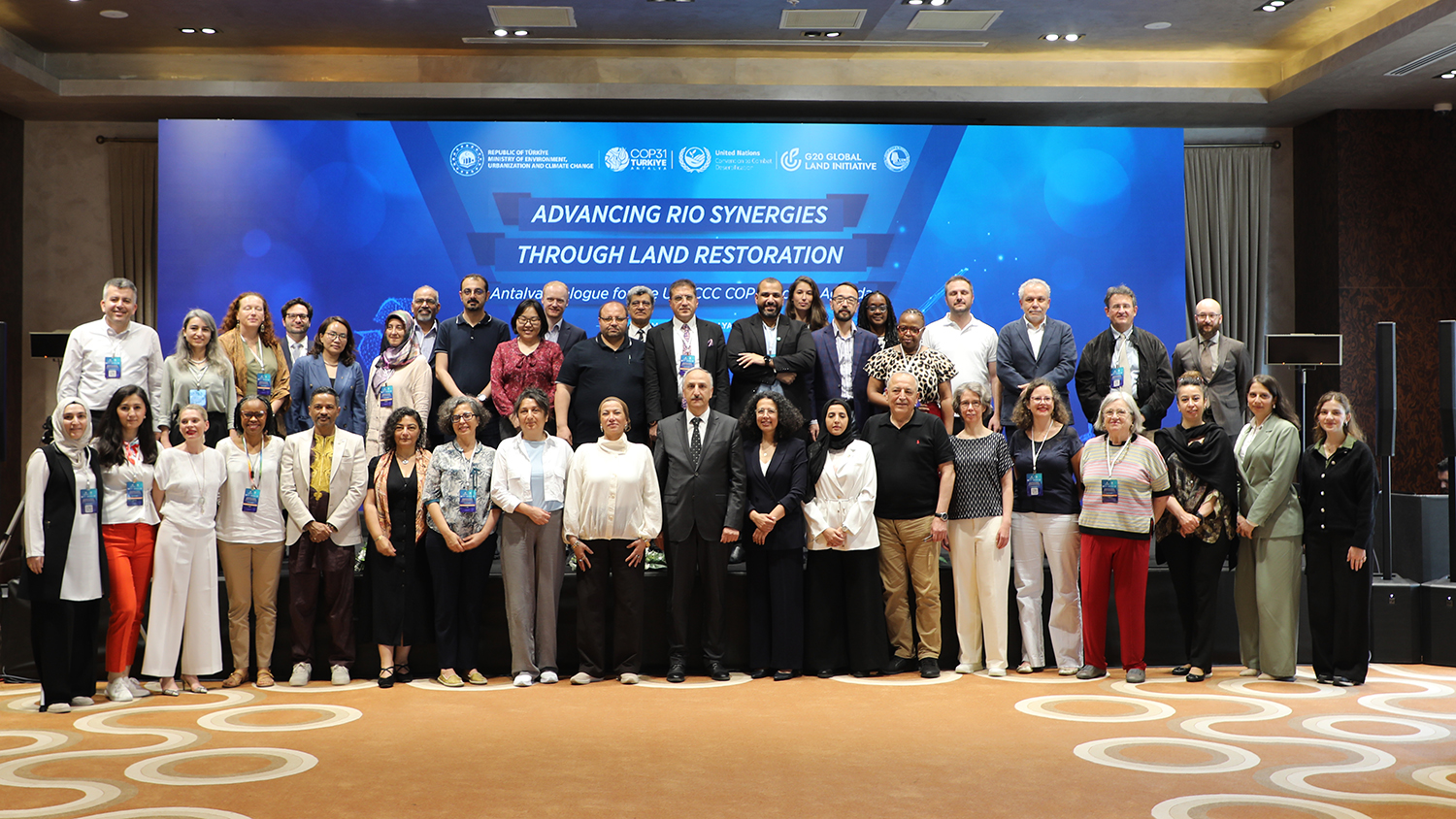
Photo credit: UNCCD G20 Global Land Initiative
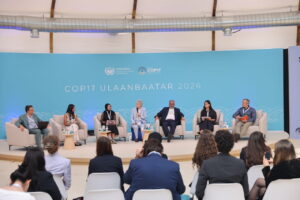
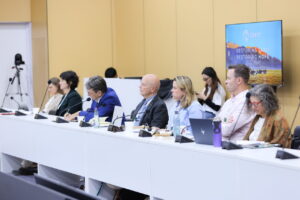
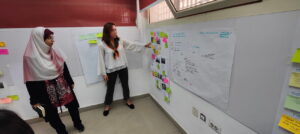
The Government of Türkiye, under the umbrella of the G20 Global Land Initiative at the United Nations Convention to Combat Desertification (UNCCD), convened G20 members, current and incoming COP presidencies, partner agencies, relevant initiatives and UN entities for the Antalya Dialogues. The pre-UNFCCC COP31 meeting focused on gathering perspectives on strengthening synergies across the three Rio Conventions on climate change (UNFCCC), biodiversity (CBD), and desertification, land degradation and drought (UNCCD) as part of Türkiye’s priorities for the COP31 Action Agenda.
Held at a pivotal moment when all three Rio COPs will convene within the same year, the Antalya Dialogues reflected strong convergence around the need to move from political recognition to implementation, emphasizing land restoration as an operational convergence point across climate, biodiversity and land agendas with direct benefits for people, livelihoods and resilience.
Rio Convention synergies in the ‘year of three COPs’
The Antalya Dialogues took place as 2026 marked a critical “year of three COPs,” with the UNCCD, CBD and UNFCCC COPs set to convene sequentially. Participants described this as an opportunity to move beyond siloes and toward integrated implementation across the three Rio Conventions.
A recurring message throughout the Dialogue was that the debate on Rio synergies had moved decisively from “why” to “how.” Discussions throughout the meeting underscored that while global targets, commitments and initiatives already existed, fragmentation across planning systems, financing structures, reporting processes and national coordination mechanisms continued to hinder integrated and coordinated implementation.
Speaking during the Dialogue, UNCCD Executive Secretary Dr. Yasmine Fouad emphasized that the challenge was no longer recognizing the interconnected nature of climate change, biodiversity loss and land degradation, but delivering implementation that works on the ground for people and ecosystems alike.
She also stressed the importance of ensuring that Rio synergies translated into practical results rather than remaining “good on paper,” calling for a stronger focus on addressing the root causes of fragmentation and implementation gaps.
Land restoration as the operational convergence point
Discussions throughout the Antalya Dialogues identified land restoration as a practical and immediate shared implementation pathway across the three Rio Conventions. Participants emphasized that the same land areas were simultaneously relevant to countries’ climate targets, biodiversity commitments and land degradation neutrality goals, yet these commitments often continued to be planned, financed and monitored separately.
Dr. Fouad highlighted Türkiye’s role in placing land restoration at the center of the Rio synergies discussion, describing it as a critical pathway for connecting the three agendas through practical implementation on the ground.
Participants also repeatedly highlighted restoring agricultural lands as one of the highest-leverage opportunities for accelerating progress across climate action, biodiversity protection and drought resilience simultaneously, while strengthening implementation across all three conventions.
Food systems and food security as an implementation priority
Food systems and food security also emerged as important areas for advancing Rio Convention synergies under the COP31 Action Agenda. Participants highlighted that sustainable land management within food systems could support climate mitigation and adaptation, biodiversity conservation and resilience to drought, while contributing to more secure and resilient food production systems.
Dr. Fouad emphasized that food security had the potential to bring countries together around a shared implementation agenda, describing it as one of the issues capable of bridging priorities across both developed and developing countries alike.
Discussions also emphasized the importance of linking restoration efforts directly to people’s livelihoods and basic needs, particularly in vulnerable communities facing increasing climate and environmental pressures where land degradation and drought are already affecting food security, and resilience.
From fragmented systems to coordinated implementation
A central theme of the Antalya Dialogues was the need to strengthen coordination across national institutional systems. Participants noted that while many countries work through separate focal points, planning processes, reporting systems and financing streams across the three Rio Conventions, stronger national coordination mechanisms would be needed to support more coherent and integrated planning and implementation.
Inputs shared during the meeting reinforced these concerns, with participants identifying lack of national institutional coordination as the most significant barrier to implementing Rio synergies, followed by insufficient financing and policy incompatibility. Strategic planning and institutional coordination were also ranked among the highest national priorities for advancing land restoration efforts.
Türkiye’s own 2025 Rio Synergies Protocol — which established coordination among the three national focal points through a joint working group and annual action plan — was cited as a practical model for institutional coherence and integrated implementation. Additional examples shared during the Dialogue included France’s General Secretariat for Ecological Planning (SGPE), which coordinates ecological planning across government ministries, Namibia’s unified technical system supporting reporting across all three conventions, and Panama’s Nature Pledge, which brings together climate, biodiversity and land commitments under a single national unified framework.
Toward COP31: building an implementation-focused agenda
The Antalya Dialogues supported discussions informing the implementation-oriented vision of the UNFCCC COP31 Action Agenda. The meeting reinforced growing momentum behind more integrated approaches to climate, biodiversity and land agendas, grounded in stronger national institutional coordination, integrated planning and practical delivery on the ground.
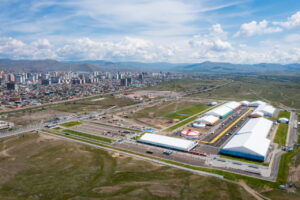
As preparations continue toward UNCCD COP17 in Mongolia, the CBD COP in Armenia and UNFCCC COP31 in Antalya, discussions throughout the Antalya Dialogues underscored that land restoration and food systems could serve as practical implementation pathways for strengthening synergies across climate, biodiversity and land agendas while delivering tangible benefits for communities, ecosystems and long-term resilience.