Call for submissions: Nature-Positive Actions Transforming Lives and Landscapes

Photo credit: Aref Tahmasebi
The Global Environment Facility (GEF), UNCCD G20 Global Land Initiative (GLI) and World Overview for Conservation Approaches and Technologies (WOCAT) invite submissions of real-world impact and human-interest stories for a forthcoming digital publication, Nature-Positive Actions Transforming Lives and Landscapes.
Building on the legacy of the Land for Life publications, this new volume will showcase innovative solutions that restore degraded landscapes while delivering tangible benefits for people, ecosystems and economies. We are seeking compelling examples of restoration efforts that are scaling up, attracting investment and advancing the goals of the three Rio Conventions: the Convention on Biological Diversity (CBD), the United Nations Convention to Combat Desertification (UNCCD) and the United Nations Framework Convention on Climate Change (UNFCCC).
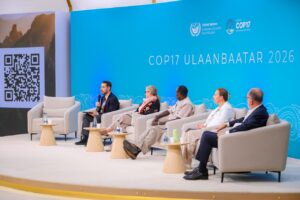
Selected stories will be professionally edited and published in the final volume and featured at major international events. The digital publication will be launched at UNCCD COP17 and presented to share knowledge, best practice and lessons learned at relevant global forums to scale action.
Who can submit
We welcome submissions from a wide range of actors involved in land restoration and nature-positive solutions, including:
- Governments, including Convention national focal points and G20 countries
- Intergovernmental organizations.
- Civil society organizations and NGOs.
- Research institutions and academia.
- Private sector actors, including StartUps and investors.
- Community-based organizations and local initiatives.
- Individuals and practitioners working directly on the ground.
- Members of the GEF partnership and UNCCD networks.
If you are contributing to restoring land or supporting truly transformative nature-positive solutions , your story is welcome.
Submissions may explore, but need not be limited to, the following themes:
- Nature Protection and Climate Solutions: Efforts that protect biodiversity and restore ecosystems while supporting local livelihoods.
- Regenerative Practices for Food, Water, Rangelands and Drought Resilience: Approaches that use regenerative and integrated land-management practices to rebuild soil health, improve food-water security and strengthen the ecosystem.
- Community-Led Restoration and Indigenous Stewardship: Restoration initiatives driven by local communities and Indigenous peoples by combining traditional knowledge with participatory land management.
- Financing and Investment for Pastoral Lands and Communities: Innovative ways to help mobilize investment, scale up restoration efforts and create viable models for sustainable pastoral land management.
- Innovation, Technology and Data for Restoration: Science-based innovations, digital tools and data systems that improve land management and ecosystem recovery.
Selection criteria
Submissions will be assessed based on the following criteria:
- Scientific credibility and evidence-based approaches.
- Scalability or demonstrated potential to scale.
- Financial viability or bankability.
- Measurable impact on people, ecosystems or local economies.
Submission requirements
Contributors are invited to submit:
- A brief description of the initiative/undertaking/movement.
- Evidence of key achievements and outcomes. For example, acres of land restored, number of beneficiaries (direct and indirect), biodiversity restored, etc.
- High-quality photographs illustrating the project and its impact.
- Relevant data demonstrating environmental and socio-economic results.
Selected contributions will be further developed into compelling narratives by a professional editorial team and may be translated into multiple UN languages.
Submission Guidelines
- Submission form: Access the form
- Deadline: 31 July 2026. However, only those stories submitted by 30 June 2026 will be considered for inclusion in the digital impact stories.
- Length: Submissions should be 1,200 – 2,000 words.
- Queries: Please send any questions to g20ico@unccd.int.
Publication and Visibility
The final publication will be available in several languages and shared widely across international platforms. Selected case studies may also be featured in curated sessions at major global events, helping showcase scalable restoration solutions and attract greater investment in land restoration.
We invite partners from across the restoration community to share inspiring examples of nature-positive actions that are making a real difference for both landscapes and the people who depend on them.