The women driving transformational leadership in the protection of Brazilian Territories
Credit: ECOSOUL
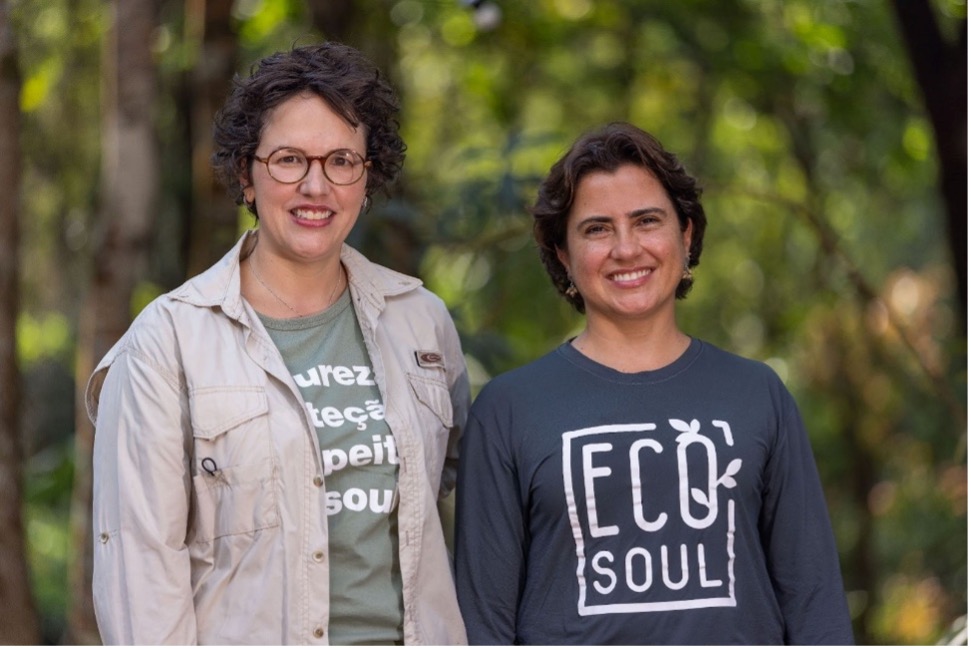
Patricial Reis (left), Claudia Marques (right)
When science, community participation and traditional knowledge come together, new ways of caring for territories emerge. It is with this vision that a women-led company, ECOSOUL Ambiental, crisscrosses different regions of Brazil to promote territorial planning, creation and management of protected areas and strengthening of socio-biodiversity value chains.
Last September, at a training organized by G20 GLI and Instituto Terra to strengthen Brazilian ecopreneurs who focus on environmental restoration and conservation, we met ECOSOUL’s co-founder, Claudia Marques.
She shared the journey of this impact-driven business, its values and the role of traditional knowledge in protecting the land. She also highlighted that woman-power fosters a more transformational way of moving forward — caring for processes, people and dialogue and ultimately building more viable solutions that support nature conservation.
We had many questions for her. Here is what she said, in her own words.
Who are the women behind ECOSOUL Ambiental?
I am Claudia, a mother and a biologist. I hold a PhD in Sanitation, Environment and Water Resources as well as a Master’s degree in Ecology, Conservation and Wildlife Management. I am also trained in facilitation. My experience includes projects in conservation, science, technology and innovation, covering topics such as bee food resources across ecosystems, geographical indication and quality and traceability in sustainable value chains — always integrating dialogue and social participation into processes.
Patrícia Reis is also a mother, a biologist, a Master’s degree in Geography holder, and a specialist in the Administration and Management of Protected Areas. She is trained in facilitation through the Germinar-Comviver Program, which brings to projects a strong focus on territorial analysis, dialogue mediation and collaborative process design.
Together, we combine complementary life paths and professional experiences, creating a systemic and integrated view of territories. Our shared focus is delivering results that generate positive impact wherever we operate. This makes our work more harmonious, respectful, and effective, opening space for creativity and meaningful engagement with the diverse people involved in each project.
We were brought together by a shared passion for nature and human relationships. We have experience facilitating participatory processes, guiding teams, institutions and communities in the collective development of conservation actions from an interdisciplinary perspective.
How was ECOSOUL Ambiental founded, and what inspired its creation?
ECOSOUL was founded in 2015 from the convergence of our professional journeys, driven by the desire and opportunity to work on projects aligned with our values and the impact we aim to create in the world. With scientific backgrounds and consolidated experience in socio-environmental management, we identified the need to create a path that offers solutions integrating technical knowledge, social participation, and innovative conservation strategies.
What problem were you hoping to solve when you launched ECOSOUL?
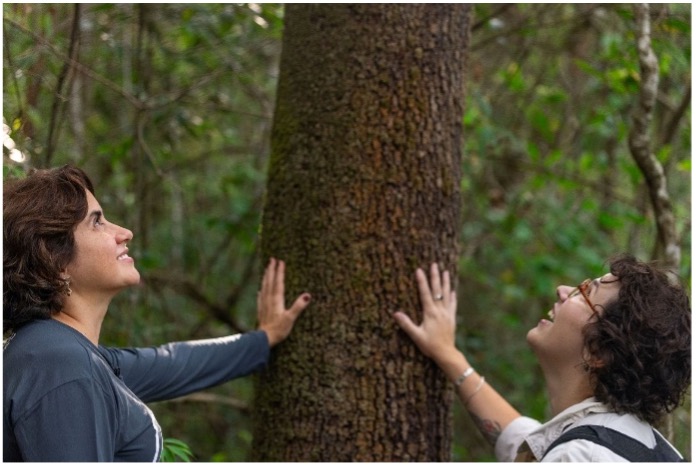
Our shared purpose is to expand the impact of nature conservation initiatives by effectively integrating the people and communities who live within these territories. We believe conservation only becomes lasting when it drives territorial transformation, values local knowledge and strengthens communities as central actors in the protection and regeneration of ecosystems. Since then, ECOSOUL has been working in environmental conservation and generating positive impact by integrating the strength of nature with human diversity. With this vision, ECOSOUL aims to establish itself as a leading socio-environmental consultancy, promoting innovation, sustainability and transformative impact through network-building and by strengthening local initiatives.
How is ECOSOUL advancing women’s leadership in conservation?
The Global Gender Gap Report (issued by the World Economic Forum in 2024) shows that gender inequality remains structural. In Brazil, fewer than 1 in 5 leadership positions are held by women. At ECOSOUL, we aim to help change this reality.
In addition to being founded by women, today, 60% of our team is composed of women who conduct research, coordinate projects, write reports and participate in strategic decision-making — reinforcing our belief that gender equity is essential for more innovative, collaborative, and future-oriented organizations.
As a woman, being respected and validated, is still a challenge across most sectors. At ECOSOUL, we focus on the power of women—who lead and care for conservation projects, creating spaces where all forms of life, history, traditions and cultures are respected. This is reflected in our results, where scientific and participatory work is strengthened through care, respect and empathy.
How does ECOSOUL combine interdisciplinary expertise with collective processes?
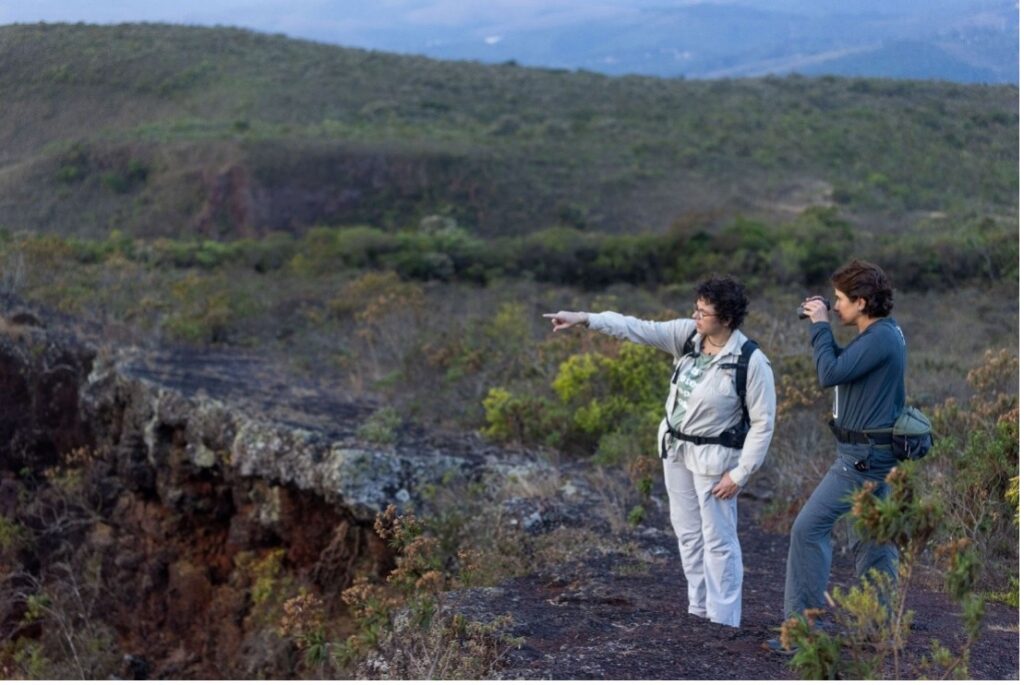
ECOSOUL’s work is grounded in interdisciplinary studies and collective processes. Our projects bring together professionals from different fields who collaborate to understand the complexity of natural and social systems.
This diversity allows for a comprehensive analysis of ecosystems, combining technical data with social, cultural and economic perspectives. At the same time, we integrate scientific knowledge with local and ancestral knowledge, recognizing that protecting nature also involves culture, history and ways of life.
We adopt participatory methodologies that prioritize active listening, consultation and consent processes, strengthening dialogue among different stakeholders. This contributes to building more effective conservation strategies, including sustainable biodiversity use and support for value chains that generate social, environmental and economic benefits for communities.
Why are protected areas essential for conservation and sustainable development?
The creation, planning and management of protected areas are essential tools for ensuring biodiversity conservation and the sustainable use of natural resources.
These processes involve technical studies, socio-environmental analysis and dialogue with various stakeholders to define conservation goals, management strategies and ways to balance environmental protection with local needs.
Management plans, monitoring programs and public use strategies strengthen governance and expand ecological, social and economic benefits over time.
How do participatory workshops and socio-environmental assessments strengthen conservation?
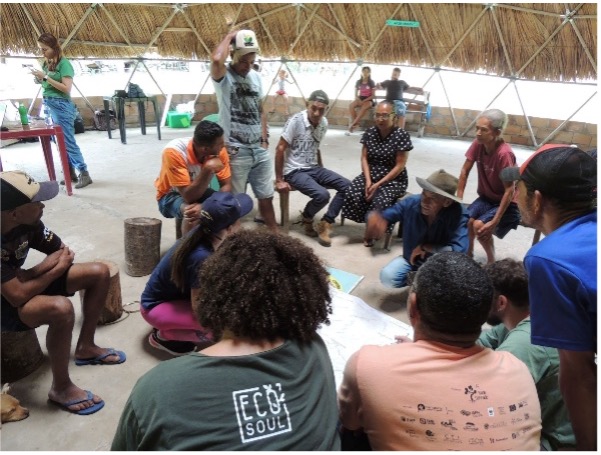
Socio-environmental assessments and participatory workshops are key tools for understanding local realities and guiding more legitimate and effective decisions.
By integrating technical data with community perspectives, these processes help identify challenges, opportunities and pathways for conservation and sustainable development. Participatory workshops create spaces for dialogue and collective decision-making, strengthening ownership and improving outcomes.
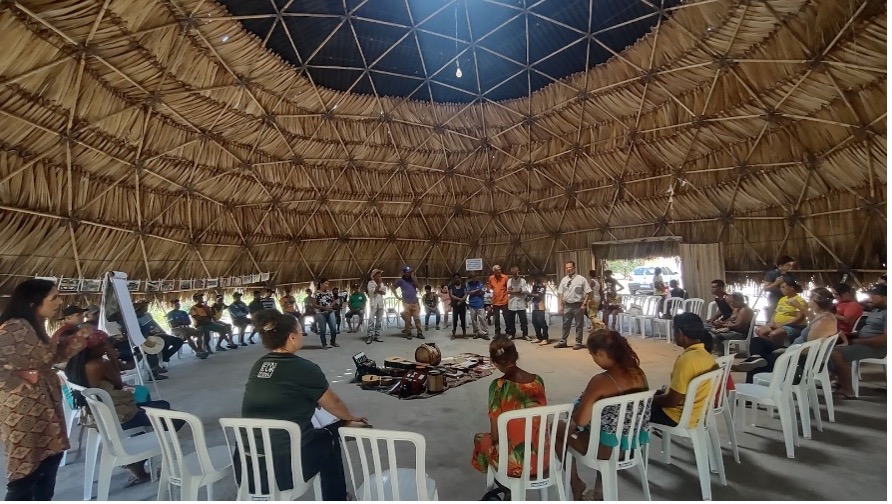
Why is deeply understanding each territory essential to conservation?
At ECOSOUL, we believe every territory is a living system shaped by unique ecological, cultural, social, and economic relationships.
Understanding these dynamics is essential for developing effective and lasting conservation strategies. This means listening to local communities, recognizing traditional knowledge, understanding socio-environmental challenges and identifying hidden potential.
This integrated approach enables the creation of nature-based solutions that are scientifically sound, socially just and aligned with global sustainability agendas.
What are the biggest challenges and emerging opportunities in environmental conservation today?
Working in the environmental field involves navigating complex realities where ecological, social and economic factors intersect. Key challenges include climate change, which intensifies extreme events and directly impacts fieldwork and biodiversity conservation as well as funding instability and the need to reconcile diverse interests among communities, institutions and public authorities.
At the same time, this field offers significant opportunities. Growing global attention to nature-based solutions, ecosystem restoration and climate agendas creates space for new approaches that integrate science, social participation and innovation. Strengthening collaboration networks and partnerships also amplifies impact.
We believe that through interdisciplinary and collaborative work, these challenges can be transformed into pathways for more lasting conservation solutions.
What did the Instituto Terra training experience mean for ECOSOUL?
My participation in the training marked another step in this journey. Engaging with people from different regions reinforced the understanding that ecosystem restoration is also a social process involving science, collaboration and commitment to the future of territories.
The training combined theory and field experiences, bringing together participants from 14 Brazilian states for deep and meaningful exchanges. Topics such as restoration in practice, impact business models, legal frameworks, impact measurement and funding strategies provided valuable insights and opened new perspectives for ECOSOUL.
Presenting ECOSOUL’s pitch was a challenging experience that encouraged reflection on how to clearly communicate our work. Being alongside changemakers reinforced the importance of collaboration and partnerships in addressing environmental challenges.
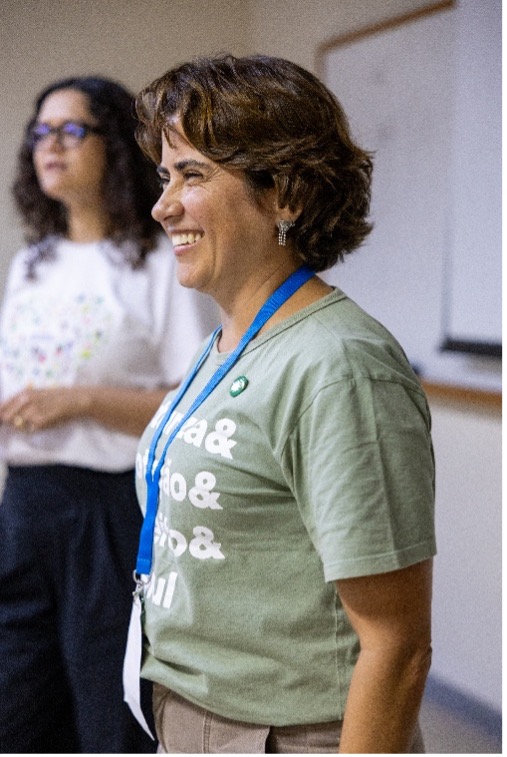
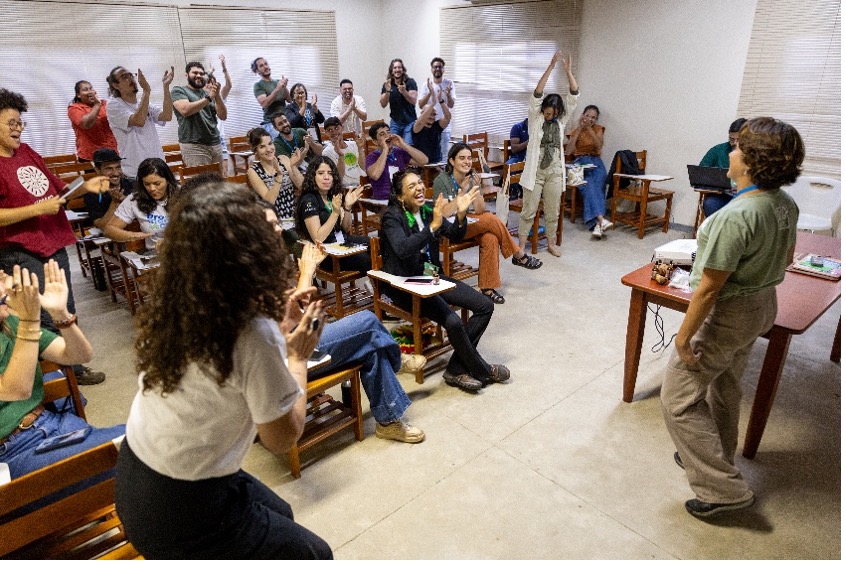
Claudia Marques at the training co-organised by Instituto Terra and G20 GLI
How Will This Experience Shape the Future of ECOSOUL?
The power of collective action shows that real transformation does not happen in isolation. As Sebastião Salgado once said, ‘We cannot be mere spectators of destruction—we must be agents of change.
Experiences like these renew energy, strengthen connections and inspire continued collaboration. The future is built collectively—through relationships, shared purpose and partnerships.
Looking back, what impact has ECOSOUL achieved so far?
ECOSOUL has implemented over 150 projects, including more than 30 management plans for protected areas. The organization has worked in 140 municipalities across 6 Brazilian states and 4 biomes (Cerrado, Atlantic Forest, Pantanal and Amazon) covering over 1 million hectares.
Participatory workshops have engaged more than 1,500 people. ECOSOUL is part of the Small and Medium-sized Enterprises (SMEs) Climate Hub and a signatory of the Women’s Empowerment Principles (WEPs), reinforcing its commitment to gender equity.
To learn more, access the Sustainability Report: https://ecosoulambiental.com.br/ecosoul/#relatorio-sustentabilidade.
What’s next for ECOSOUL, and where do you hope to expand your impact?
ECOSOUL’s future focuses on expanding positive impact by growing projects, strengthening collaboration networks and developing initiatives that integrate conservation, territorial development and socio-environmental innovation.
The organization aims to expand into new biomes and deepen work on climate adaptation and mitigation—contributing to more resilient territories. More than a company, ECOSOUL positions itself as a space connecting science, people and nature.
How can readers follow or collaborate with ECOSOUL?
Readers interested in learning more about ECOSOUL’s work can explore the organization through its website, social media channels, and online content. ECOSOUL shares updates on its projects, conservation initiatives, and territorial work through Instagram (@ecosoul_ambiental) and YouTube. Those interested in partnerships or collaboration can also connect directly with the team via social media or by email.