The Land Footprint of Artificial Intelligence: An Interview

Artificial Intelligence (AI) innovations are moving fast, but regulation remains a slow and intentional process. For those engaged with land restoration initiatives, AI seems to offer tools valuable to the cause, but is the cost of AI — its extensive land and water use, among other valid concerns — detrimental to its usefulness?
The Director of the G20 Global Land Initiative, Muralee Thummarukudy, recently attended the AI for Good Summit in Geneva, Switzerland, hosted by the International Telecommunication Union. In this short interview, he shares his key reflections.
Q1: From your perspective as a leader in land restoration, what were the most significant outcomes of the Summit?
The Summit proved that AI is a double-edged sword for our planet. The key takeaway is that governance is struggling to keep pace with the technology. While we saw remarkable innovations — and it was gratifying to witness I helped initiate back in 2019 — the prevailing anxiety is real. Critically, the conversation for us has decisively shifted. We are no longer just asking what AI can do for land, but what it is doing to land and people.
Q2: The Summit identified three critical challenges. How do they impact your mandate?
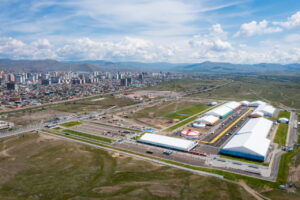
The Summit honed in on three interconnected challenges. First, its rapid advancement is a threat to widespread job displacement, and it is unclear if new roles will match the scale of the job losses or if upskilling will happen fast enough. Second, the environmental footprint is our frontline issue. Data centers consume vast amounts of water and power, and they require significant land, often competing with agriculture and natural habitats. Third, there is the complex matter of intellectual property. When AI generates new content, how are the original creators — whose data trained the models — to be compensated? We don’t have all the answers, but now is the time to build a social consensus.
Q3: Considering AI’s ‘land footprint,’ what does the Global Land Initiative plan to do?
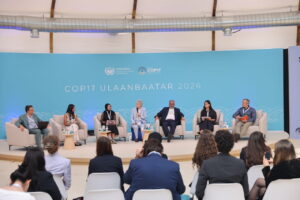
We must start treating land as a non-renewable resource. Our priority is to bring this footprint into the light. At UNCCD COP17, we are hosting a side event with the United Nations University, leveraging their recent report to establish clear metrics. When a hyperscale data center is proposed, we need to look into the land use: how much is taken, what was there before, and is it replacing arable land or critical ecosystems? We need to push for these assessments to become standard practice.
Q4: How can AI practically accelerate land restoration while balancing the risks?
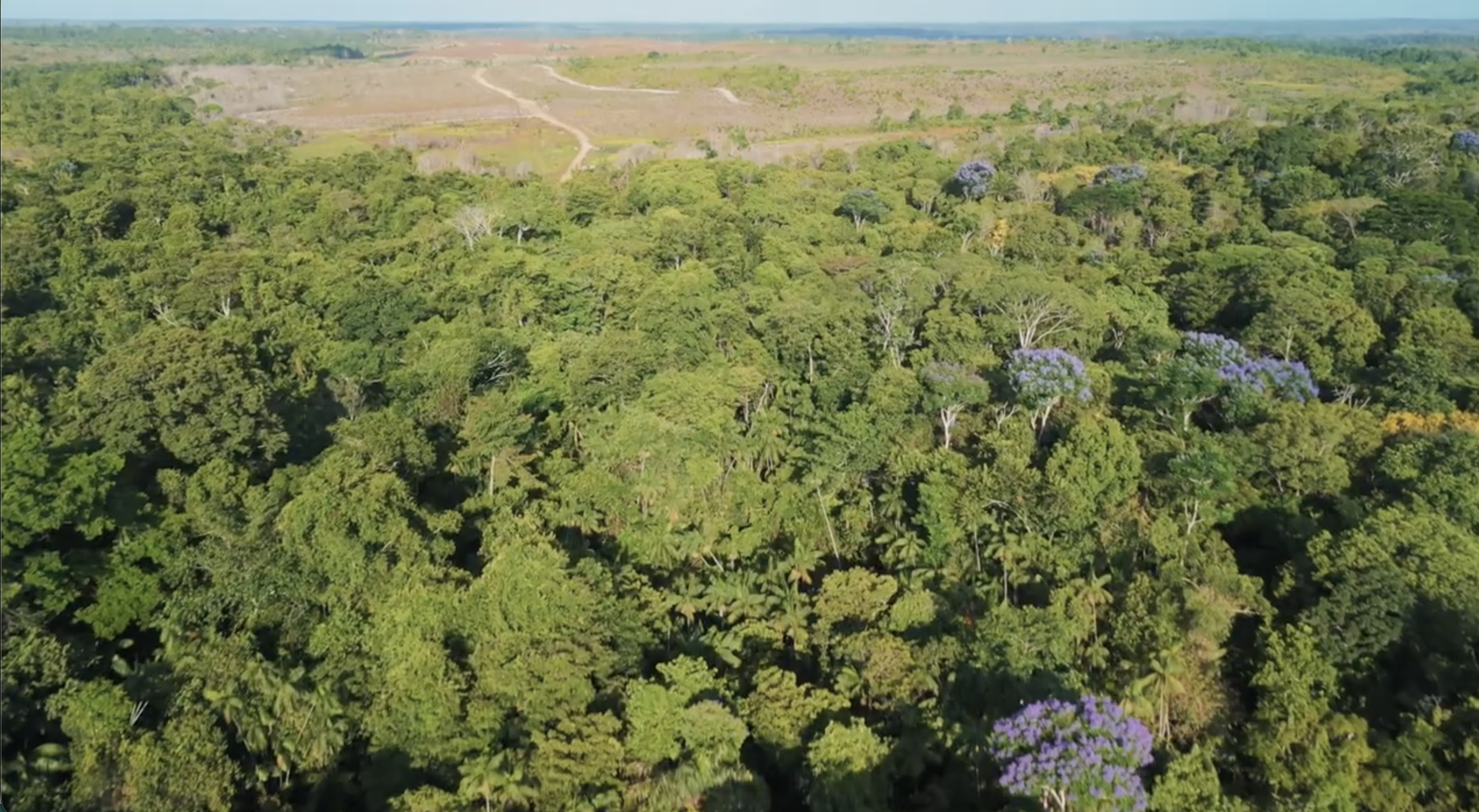
Despite the risks, the operational potential is too great to ignore. AI allows us to conduct near real-time, high-resolution global assessments of degradation and restoration. We can use it to monitor vegetation and land-use changes via satellite with incredible precision. Equally, it can break down language barriers, translating and summarizing techniques to scale capacity-building globally, so a success in Senegal can inform a project in Australia in days, not years.
Q5: What are the next steps for the UNCCD on governance and transparency?
Action is imperative. The UNCCD must join the UN Secretary-General’s AI Environmental Transparency Initiative to ensure land and water impacts are prioritized alongside carbon emissions in global reporting. Furthermore, the findings from our COP17 side event will help us forge partnerships between UN agencies and industry, advocating for mandatory environmental disclosures for AI infrastructure. Trust and interoperability, as we stressed in Geneva, start with transparency, and we must lead by example.