G20 GLI at EU Green Week 2026
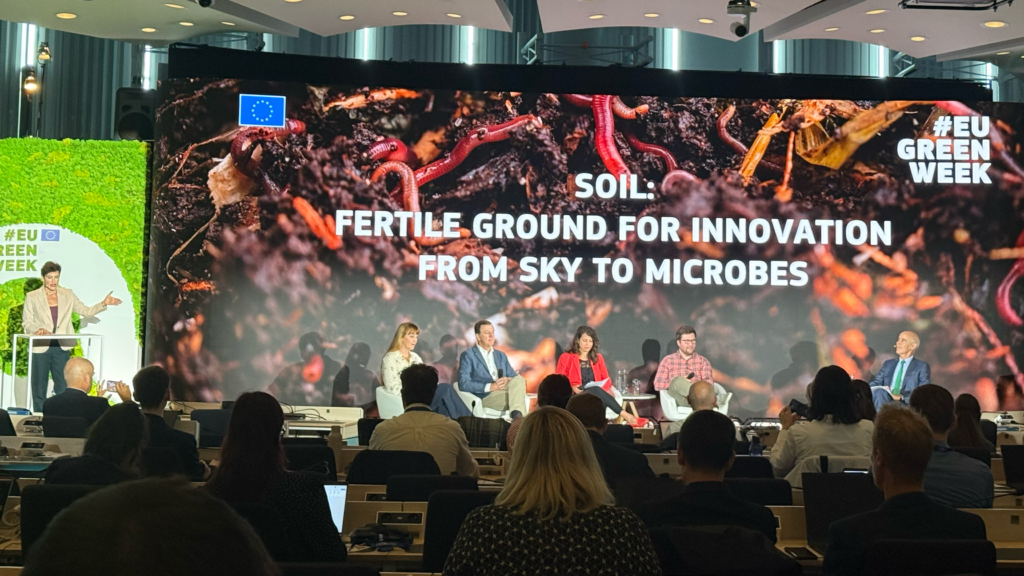
Photo credit: UNCCD G20 GLI
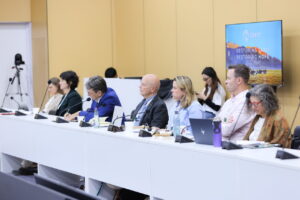
The G20 Global Land Initiative participated in EU Green Week 2026 in Brussels, where policymakers, investors, businesses, researchers, farmers and civil society representatives gathered to explore how investment can support the transition towards a nature-positive economy.
The discussions took place at a pivotal moment for Europe, when conversations are increasingly shifting from environmental commitments to questions about delivery, financing and market readiness. Member States are currently preparing National Restoration Plans that will translate ambitious restoration targets into practical implementation, following the entry into force of the EU Nature Restoration Regulation in 2024.
Across the two-day programme, a clear message emerged: the conversation is moving from protecting nature to financing restoration.
One of the strongest themes to emerge from the event was the growing recognition that restoration is not only an environmental imperative, but also an economic one. Speakers repeatedly emphasized that healthy ecosystems underpin food production, water security, climate resilience, supply chains, and long-term competitiveness.
Discussions highlighted the substantial economic returns associated with restoration investments and challenged participants to consider how nature can be reflected better in financial and economic decision-making. This was captured by a recurring question at the event: “How do we put nature on the balance sheet?”
At the same time, participants acknowledged that the primary challenge is no longer awareness. The challenge is creating the conditions for investment to flow at the scale required. Discussions highlighted the need for credible projects, measurable outcomes, stronger biodiversity data, improved corporate reporting, and investment structures capable of reducing risk and attracting both public and private capital.
In short, the focus is increasingly shifting from understanding the value of nature to making restoration investable.
Another recurring theme was the relationship between regulation and markets.
While voluntary action remains important, many participants emphasized that clear policy frameworks, disclosure standards and credible measurement systems are essential to creating investor confidence and accelerating private-sector participation. Across multiple sessions, discussions reinforced the idea that markets scale more rapidly when supported by predictable rules and long-term policy certainty.
The event also underscored the growing links between ecosystem health, economic resilience and social stability. Participants highlighted how land degradation, biodiversity loss, water scarcity, and resource pressures increasingly affect livelihoods, food systems, economic performance, and long-term development outcomes. Restoration is therefore being viewed not only as an environmental objective, but also as a strategic investment in resilience, prosperity, and future security.
For the G20 Global Land Initiative, these discussions strongly reinforced the relevance of the Restoration Economy approach. Across conversations on finance, regenerative agriculture, biodiversity, entrepreneurship, and innovation, a common theme emerged: the foundations of a restoration economy are already taking shape.
Entrepreneurs, land stewards, businesses, investors, researchers, and policymakers are actively developing solutions; the challenge now is connecting these actors and creating the enabling conditions for them to scale.
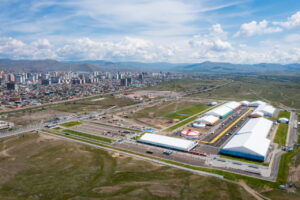
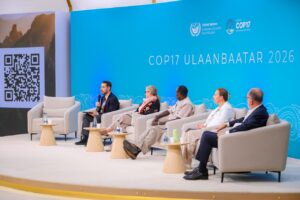
As preparations continue for UNCCD COP17 in Mongolia, including the first-ever Restoration Industry Symposium, and a series of upcoming regionals Restoration Economy Dialogues, the G20 Global Land Initiative remains committed to fostering the partnerships, market development, and investment pathways needed to accelerate restoration worldwide.
The conversations in Brussels demonstrated that momentum is growing. The next step is turning that momentum into collaboration, investment, and action on the ground.