Witness how women and water transform livelihoods in a year
Nath Sanskriti Seva Sansthan
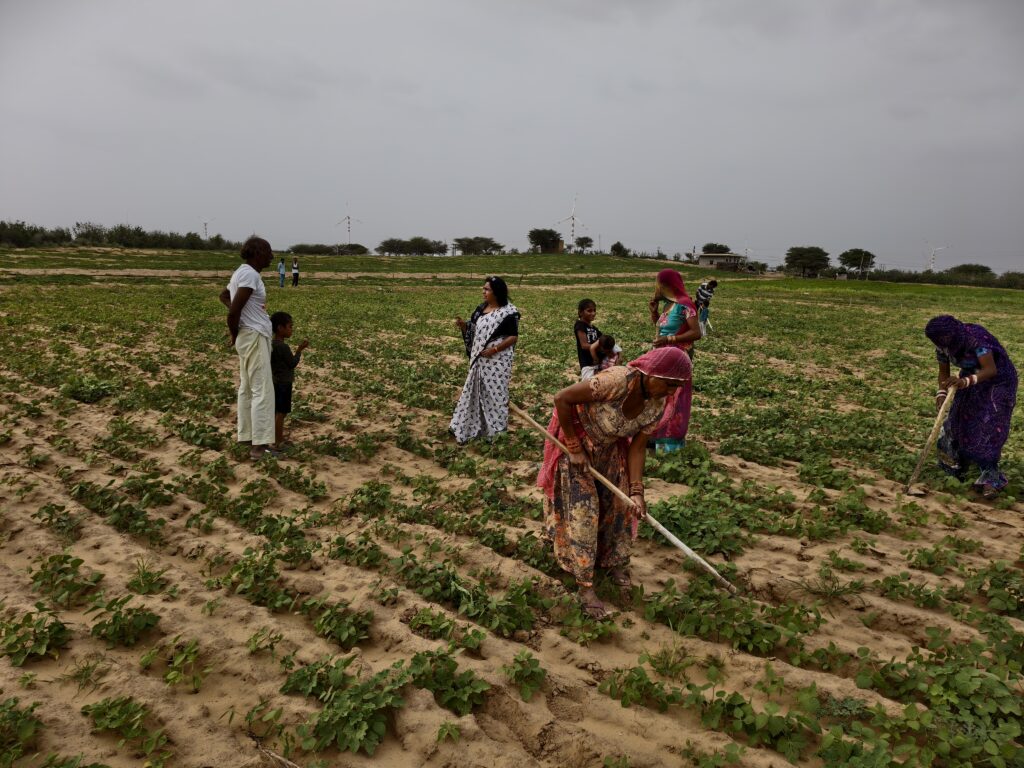
After restoration, a woman farmer cultivates peanuts and vegetables on land that was once barren — a visible sign of renewed soil and livelihood.
In Shiv Block, a rural area in Barmer district in the desert state of Rajasthan, India, land does not fail quietly. It cracks. It dries. It waits.
For years, farmers in this arid region watched their soil turn unproductive as rainfall patterns shifted and water sources disappeared. Fields that once supported families became stretches of sand. For communities where agriculture once sustained both livelihoods and food security, restoring land is today synonymous with restoring opportunity.
And it is women playing a central role in that transformation. Social worker Sarita Yogi is among them.
For more than two decades, Yogi has worked on women’s empowerment, rural development, education and environmental protection across Rajasthan.
Nath Sanskriti Seva Sansthan, a grassroots organization founded by Sarita Yogi, launched a community-based restoration initiative in Shiv Block, after receiving support from the Restoration Returns Grants programme, the small grants programme of UNCCD G20 Global Land Initiative.
Through this project, the organization worked directly with farmers and local communities, focusing both on restoring degraded land and rebuilding the knowledge and confidence needed to sustain it.
The change began with water.
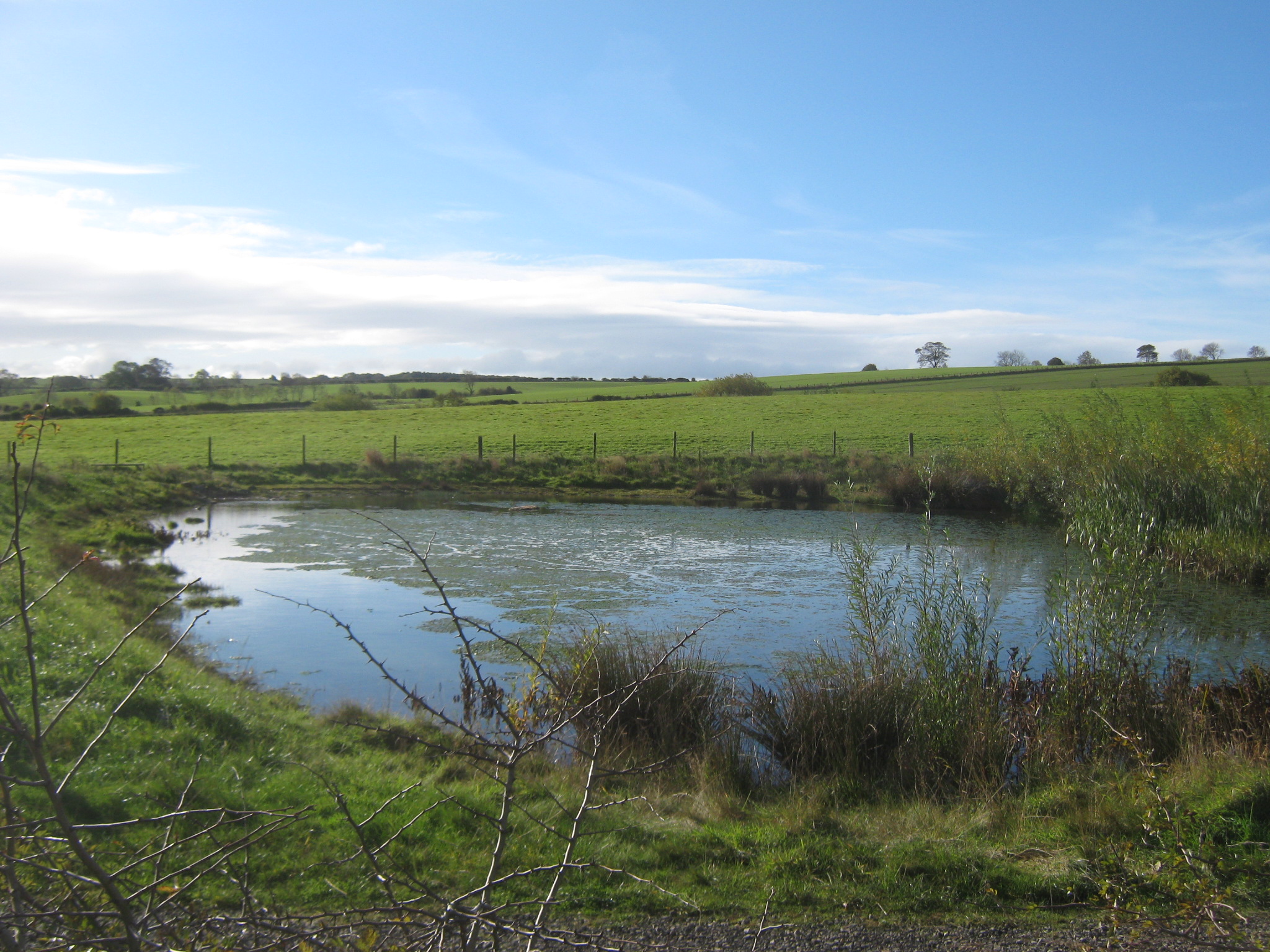
First, a rainwater harvesting pond was constructed on public land in Shiv Block. That single intervention helped to convert approximately 16 hectares of the surrounding land into arable farmland. What had been barren soil began to hold moisture again. Farmers prepared the fields for pearl millet cultivation. Green shoots returned.
Among those farmers was Moolchand, who had nearly 50 hectares of land in Shiv village lying unused due to severe water shortage. Through this project, the organization connected him to relevant government schemes and facilitated the construction of a 100×50 foot diggi pond, a traditional on-farm water storage structure that is common in Rajasthan.
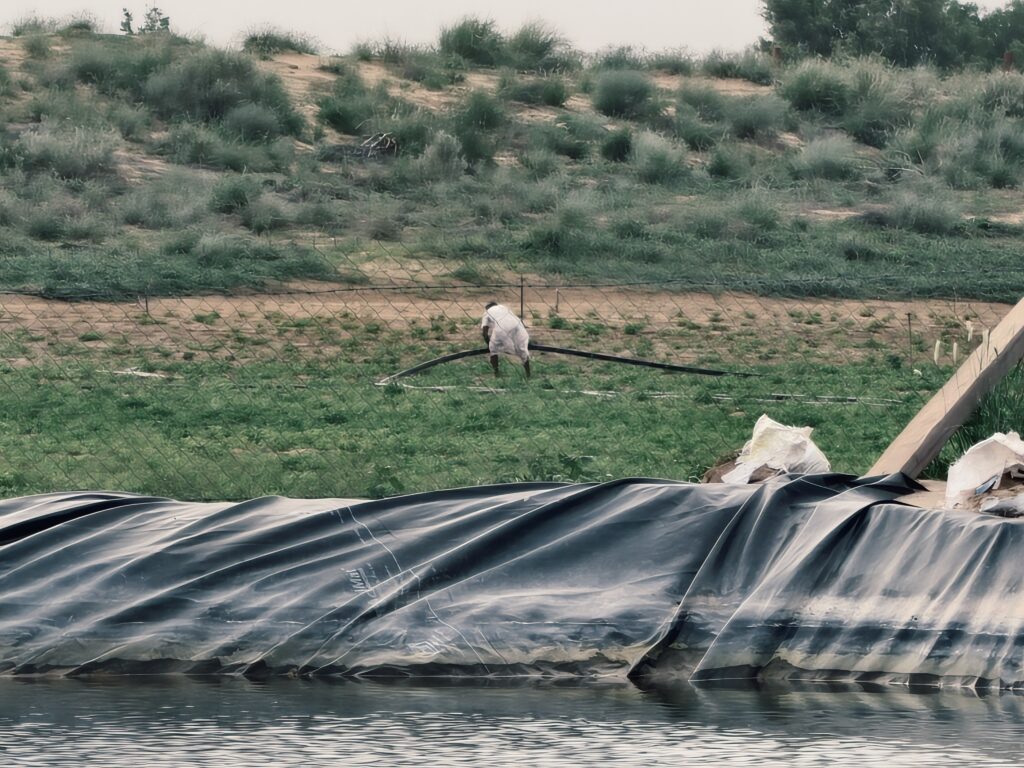
Farmer Moolchand at work close to the 100×50 foot diggi pond that enabled irrigation on his first bajra and peanut harvest. Photo credit: Nath Sanskriti Seva Sansthan
With irrigation finally possible, his once-barren land was brought back into cultivation, producing bajra (pearl millet) and peanuts for the first time in years. The transformation was visible: from sandy, degraded soil to fields prepared for harvest.
Household water security was also strengthened. Five rainwater harvesting tanks were constructed for farmers, among them Nathi Devi, and Dinaram and Madan Singh. Each tank stores 12,000 litres of water; enough to support domestic needs, irrigate kitchen gardens, and sustain livestock through dry months.

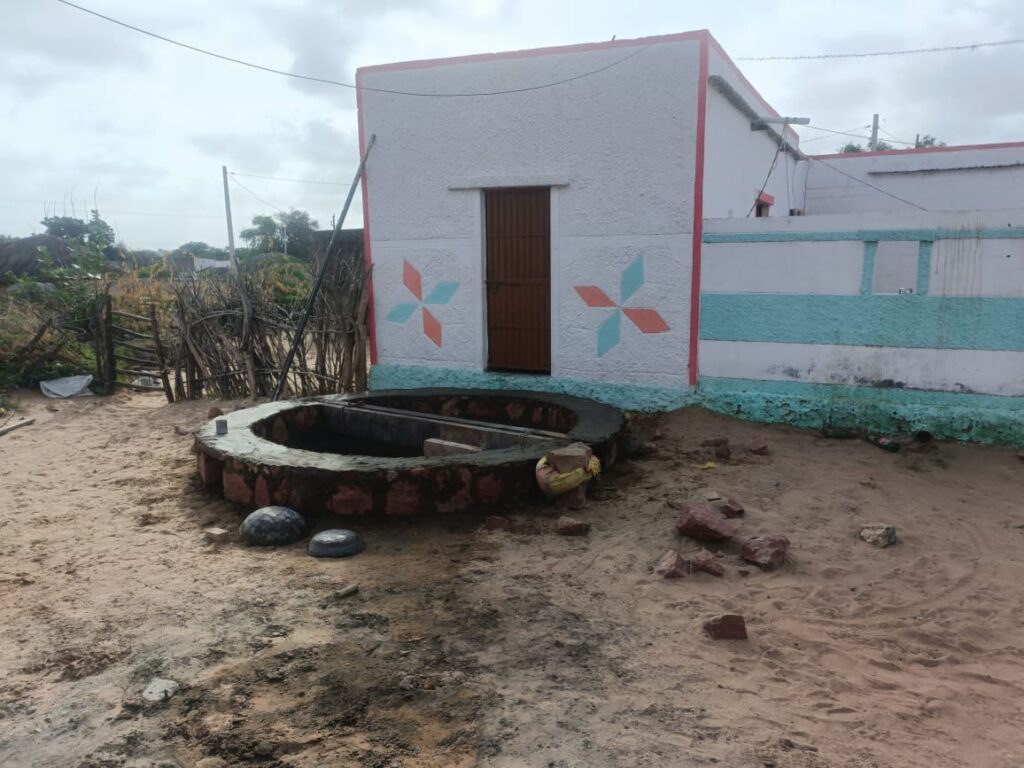
Water harvesting system installed at farmers’ homes. Photo credit: Nath Sanskriti Seva Sansthan.
In a desert landscape like western Rajasthan, water is not infrastructure. It is security.
But restoration here was not only about ponds and tanks. It was also about people learning how to restore the productivity of their soils.
Women at the Centre of Action
Women became central participants in this process. More than 200 women farmers, alongside 100 male farmers and over 100 youth and students, took part in hands-on training sessions covering rainwater harvesting, soil conservation, organic farming, compost preparation and agroforestry practices.


Agriculture expert Gopal Singh leads hands-on training in organic farming and land restoration for local agriculture students. Photo credit: Nath Sanskriti Seva Sansthan
Training took place directly in the fields. Experienced farmers demonstrated the planting techniques. The agricultural experts introduced the land use practices, such as deep ploughing to improve soil moisture retention and organic manure preparation to reduce dependence on chemical fertilizers.
For many women in the community, these sessions represented the first time their agricultural knowledge and contributions were formally recognized.
During the project’s closing ceremony, women farmers received organic seeds and training kits, and several were honored for their active participation.
To ensure knowledge continues to circulate within the community, the women trained as leaders were appointed as “Agriculture Sakhis.”
In Hindi, Sakhi means “friend.” In rural development programmes across India, Agriculture Sakhis serve as trained community resource persons; local women who guide other farmers on sustainable practices, share knowledge and support agricultural decision-making within their villages.
Through this network of women leaders, the project’s lessons now extend far beyond the initial training sessions.
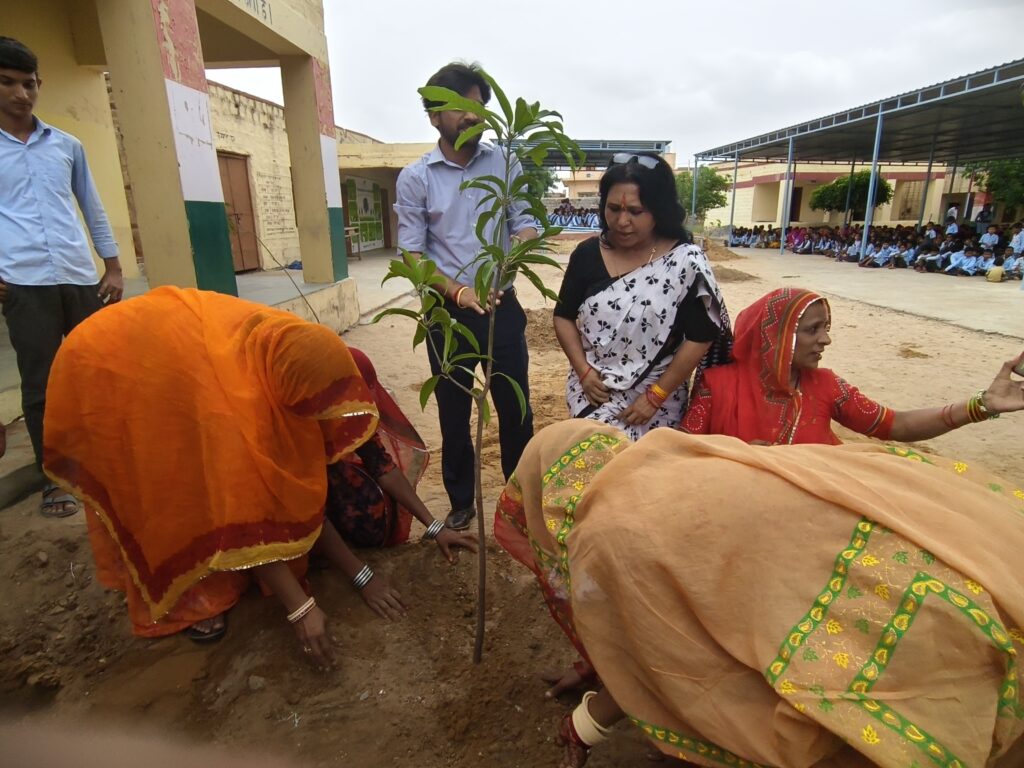
Women farmers and students plant mango, banyan, jamun, lemon, almond and Ashoka trees at Shiv School. Photo credit: Nath Sanskriti Seva Sansthan
Community restoration activities also reached local schools. Women farmers and students planted mango, banyan, jamun, lemon, almond and Ashoka trees at Shiv School as part of a commitment to create a greener learning environment.
Across the programme, 500 saplings were distributed and 101 trees planted.
Through this grant, 16.18 hectares of land were directly restored. Yet the deeper changes unfolding in the community are harder to quantify.
Women who once hesitated to speak during meetings now lead discussions on organic farming. Elder farmers share traditional water knowledge with younger generations. Students prepare projects on soil conservation and climate resilience.
Farmers who once leased out degraded land are beginning to reclaim it.
In Barmer, land restoration is no longer an abstract environmental goal. It is visible in fields where pearl millet grows again, in kitchen gardens sustained by harvested rainwater, and in women farmers guiding their communities toward more resilient agricultural practices.
What began as a small grant has grown into something larger: a community restoring its land — and women helping lead the way forward.
Latest News
- Young entrepreneurs from Argentina, Uganda win UN global pitch contest at ChangeNOW: Youth Ecopreneur Awards

- UNCCD Executive Secretary Dr. Fouad welcomes Saudi Arabia’s landmark achievement in land restoration
- Saudi Arabia marks restoration of one million hectares of land, advancing global momentum on land resilience

- UNCCD G20 Global Land Initiative publishes 2025 annual report

- Eight finalists named for Youth Ecopreneur Awards

Upcoming Events