Faith and Business: Building the partnerships land restoration needs
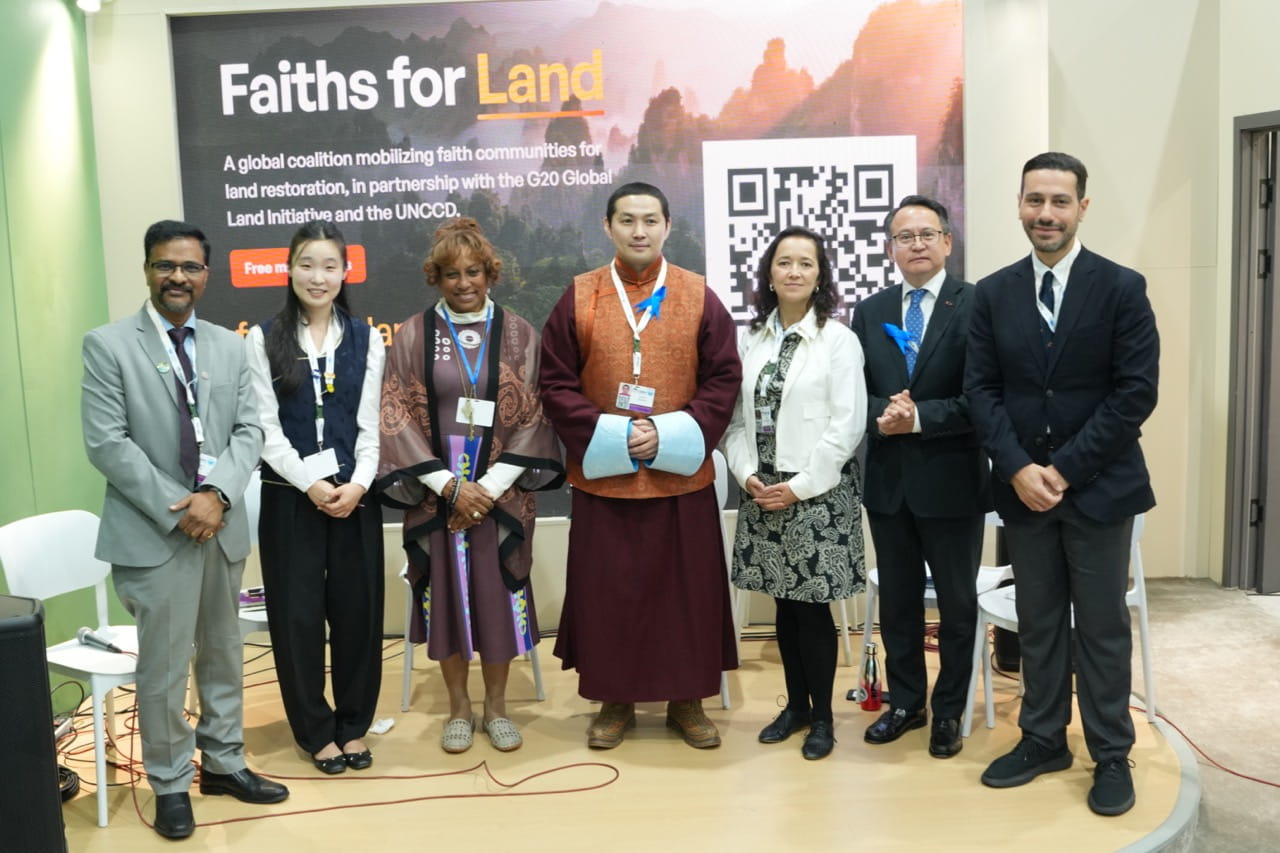
At UNCCD COP17, G20 GLI and its partners explored how faith can move land restoration from commitment to delivery.
The session was part of a wider week of engagement. Across six faith-focused events, the G20 Global Land Initiative convened sessions, partnered on others and contributed to dialogues led by faith and civil society organizations. Together, they explored how faith can accelerate restoration through action on the ground, partnerships with civil society, collaboration with businesses and investors, and practical approaches including regenerative agriculture, agroecology and farmer-managed natural regeneration.
Within that broader programme, the faith and business session addressed a specific delivery challenge. An estimated US$355 billion is needed each year to restore degraded land and strengthen drought resilience, compared with approximately US$77 billion currently mobilized. Closing the gap depends on more than capital: it also requires landholders, businesses and community institutions to work with a shared understanding of value and long-term accountability.
On 25 August, the G20 Global Land Initiative brought that question to the Business4Land Pavilion in a session held with Business4Land, the Business Council of Mongolia and the World Economic Forum’s Global Future Council on Faith in Action. Moderated by Tariq Al-Olaimy of the G20 Global Land Initiative, it brought together His Eminence Naro Banchen Khutagt Rinpoche; H.E. Ganbold Dambajav; Anita Diederichsen of WWF and the Global Partnership on Forest and Landscape Restoration; Dinesh Suna and Rev. Dr Angelique Walker-Smith of the World Council of Churches; and Mongolian environmental youth leader Enkhuun Byambadorj.
Land restoration through a wellbeing economy lens
The session formed part of Business4Land, the UNCCD’s principal platform for engaging companies and financial institutions in sustainable land and water management. Its work across business operations, value chains, finance and policy complements the G20 Global Land Initiative’s ambition to reduce degraded land by 50% by 2040. A wellbeing economy lens adds a question of purpose: does economic activity improve collective social and ecological wellbeing within planetary boundaries? Applied to land, it asks what grows, who benefits, how gains are distributed and whether ecological limits are respected.
The commercial case is already substantial. Together, land degradation, desertification and drought produce an estimated US$878 billion in annual economic losses. Up to 40% of the world’s land is degraded. In Mongolia, nearly 77% of the country’s land is affected by degradation, with consequences for pastoral livelihoods, food production and the wider economy. Restoration can reduce these risks while creating new activity: the global land restoration economy is valued at approximately US$37 billion and could approach US$70 billion by 2031.
Faith institutions bring economic weight and a different account of value. They are lifelines for communities on the front line of climate and nature emergencies, owning an estimated 5% of commercial forests and stewarding at least 8% of the Earth’s habitable land. Collectively they are the world’s third-largest investment group, and their schools, hospitals and communication networks form much of the invisible infrastructure of climate resilience across the Global South. Principles of stewardship, dignity, sufficiency and responsibility to future generations can shape investment horizons, ownership models and measures of success.
From complementary strengths to practical partnerships
The G20 Global Land Initiative’s global stocktake of faith-led restoration engaged more than 100 organizations in 24 countries, together reaching an estimated 650 million people. Of these, 74% were already restoring land and more than 90% wanted to do more, but many lacked technical knowledge, finance or suitable partners. Businesses and conservation organizations can help close those gaps; faith actors bring land, local infrastructure, community relationships and continuity beyond short project cycles.
Effective partnerships go beyond exchanging land for money. Businesses bring project development, technology, market access and monitoring; conservation organizations contribute ecological expertise; and public institutions provide policy alignment. Faith institutions add local knowledge, patient stewardship and links to livelihoods and education. Together, they could restore faith-managed land, support regenerative agriculture, mobilize faith-aligned investment and build local enterprises in forestry, water management and nature-based tourism.
His Eminence Naro Banchen Khutagt Rinpoche illustrated the opportunity through pilgrimage tourism. Pilgrimage routes connect sacred landscapes with transport, accommodation, guiding and local enterprise. One market analysis valued global religious tourism at US$286.6 billion in 2024. A land-positive model would respect ecological limits and the sacred character of each place, strengthen local ownership and direct revenue towards conservation and restoration.
Scaling partnership across connected systems
The World Economic Forum’s Faith in Action Transformation Map shows how land restoration crosses sectors. It connects faith and business across development and transition finance, corporate governance, trade and investment, food and water systems, public health, social protection, civic participation and the just transition. This supports a public-private-philanthropic-faith model in which each partner contributes capabilities the others cannot easily reproduce.
Scaling requires shared goals, capable intermediaries, credible finance and governance that gives communities real influence. Women’s leadership matters because women often carry responsibility for food, water and household resilience but have less access to land, capital and decisions. The session also highlighted how partnerships should resource women-led faith and civil society organizations, include women in governance and track who controls the assets and income restoration creates.
The panel also discussed the dangers of ‘Faith-washing’, which occurs when a company borrows faith partners’ reach or moral credibility without changing harmful practices, sharing power or producing measurable community benefits. The safeguard is genuine participation: faith actors help shape projects, communities have clear rights and grievance mechanisms, and partners report transparently on ecological and social results. These disciplines protect trust and make partnerships more durable and investable.
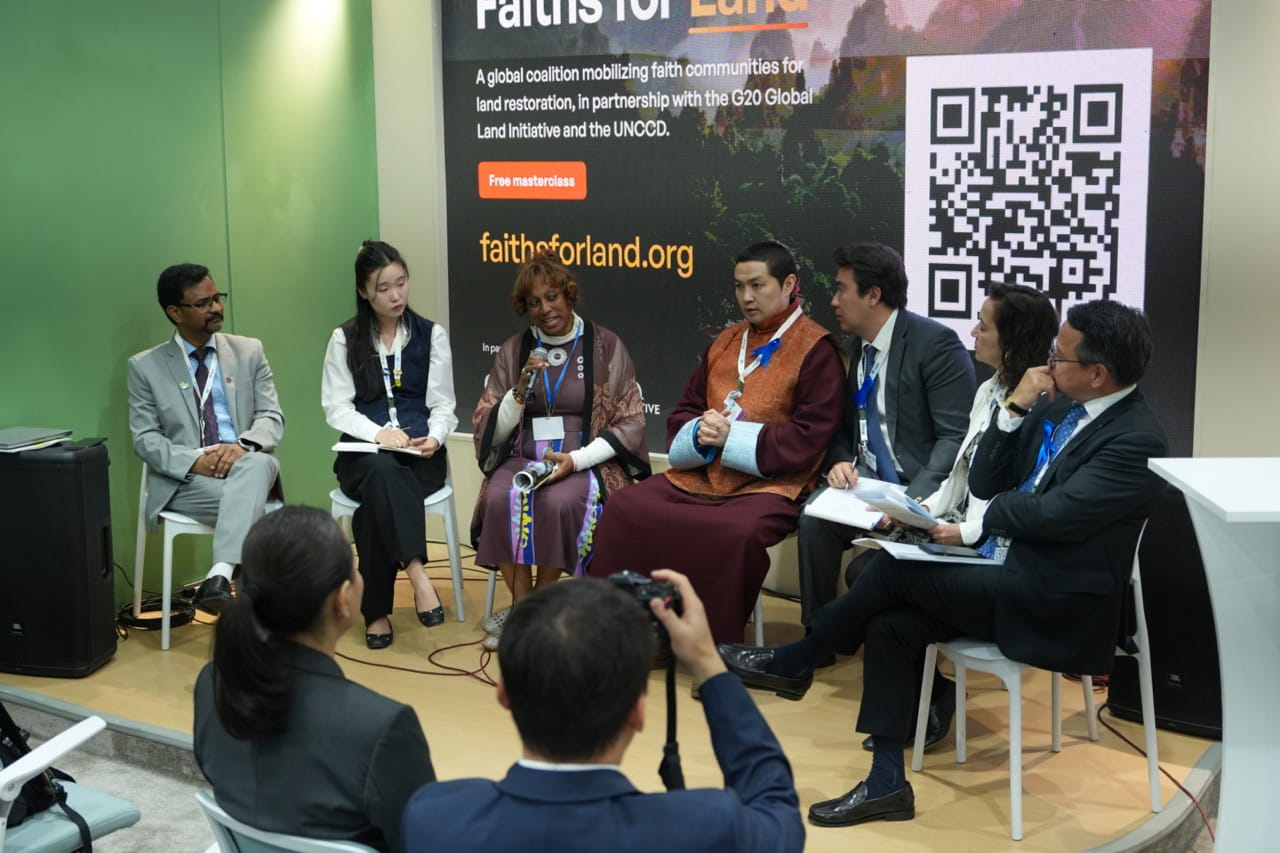
The newly launched Faiths for Land Masterclass, developed by the G20 Global Land Initiative with WWF’s Beliefs & Values Programme, helps move this agenda from intent to action. Its nine modules cover restoration principles, project design, partnerships, finance, delivery and monitoring.
Ultimately faith institutions bring land, investment power, values and community infrastructure; businesses bring finance, technical capability and access to markets. Connecting these strengths can close delivery gaps when the commercial logic is clear, communities have real influence and every partner remains accountable for the value it creates.