Saudi Arabia marks restoration of one million hectares of land, advancing global momentum on land resilience
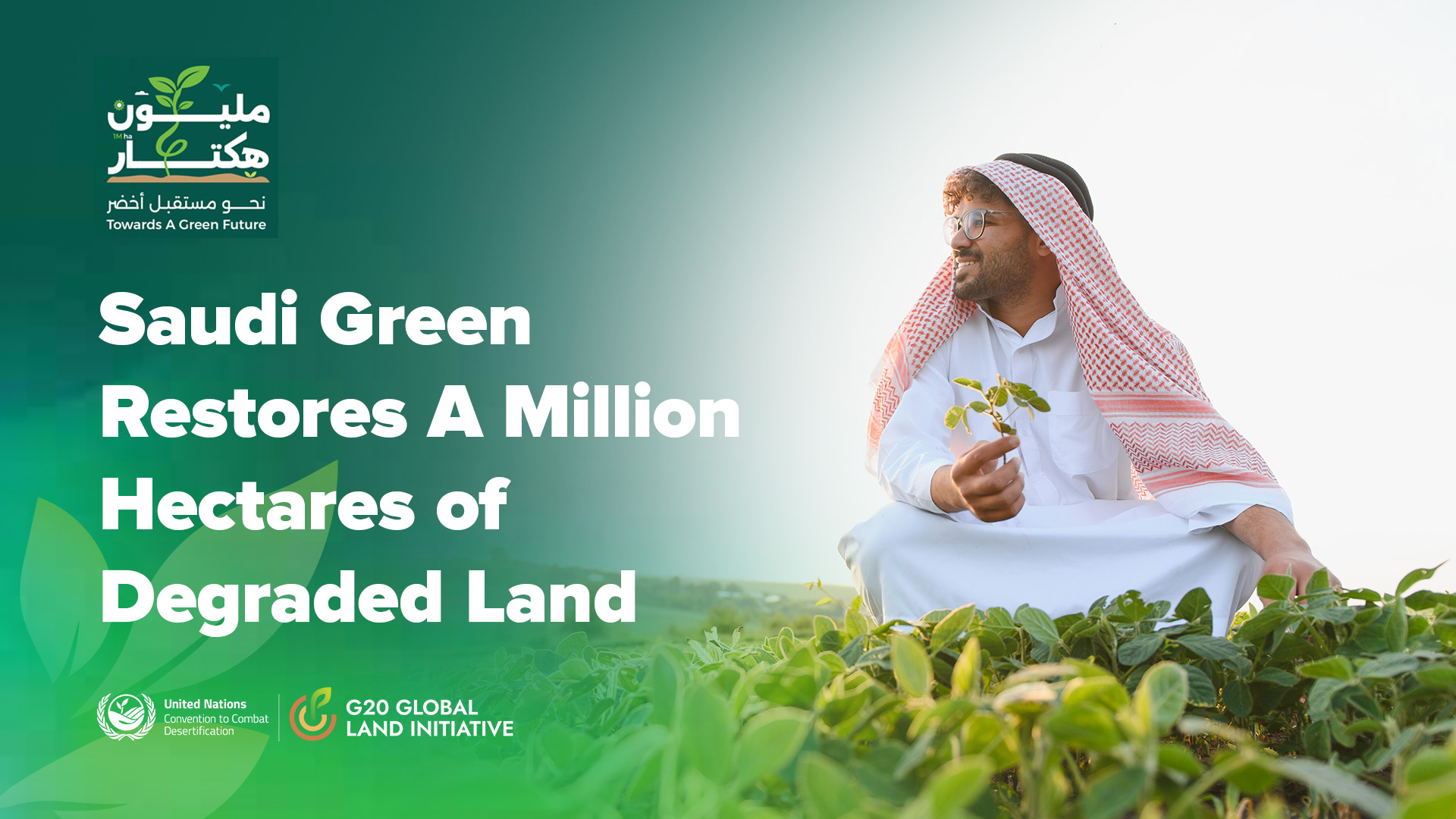
Photo credit: UNCCD/G20 Global Land Initiative
Riyadh/Bonn, 27 March 2026 — The Kingdom of Saudi Arabia has reached a major milestone in restoring degraded land, announcing the rehabilitation of one million hectares under the Saudi Green Initiative, demonstrating that large-scale land restoration is achievable even in some of the world’s most water-scarce environments.
The achievement comes at a time of growing global pressure on land and water systems, as droughts intensify, food systems face increasing strain, and land degradation continues to affect nearly half of the global population.
“This milestone shows that restoring land at scale is not only possible but also it is already happening,” said UNCCD Executive Secretary Dr. Yasmine Fouad in a recorded message marking the occasion. “In a world facing rising drought and increasing water stress, this achievement sends a clear signal: with the right policies, science, and commitment, countries can turn environmental challenges into opportunities for resilience and growth.”
“Reaching one million hectares of restored land marks a pivotal milestone in Saudi Arabia’s environmental journey. It reflects our leadership’s commitment to sustainability and demonstrates how coordinated action across government, private sector and communities can deliver lasting impact, strengthening ecosystems, supporting biodiversity, and advancing our Vision 2030 goals.” Eng. Abdulrahman bin Abdulmohsen Al-Fadley, Minister of Environment, Water and Agriculture – KSA.
Implemented under challenging climatic conditions and limited water availability, the restoration effort reflects a comprehensive approach combining innovation, science-based solutions and long-term planning. Measures such as cloud seeding programmes, early warning systems for sand and dust storms, and the expansion of protected areas have contributed to strengthening ecosystem resilience and improving land productivity.
Land restoration is increasingly recognized as a critical investment in sustainable development. Healthy land systems underpin food security, water availability, economic resilience and stability, making restoration not only an environmental priority, but a strategic economic and social imperative.
“Land is our most vital infrastructure,” added Dr. Fouad. “When land degrades, water systems weaken, food production declines, and communities become more vulnerable. Investing in healthy land is investing in people, stability and long-term prosperity.”
Saudi Arabia’s efforts also contribute to strengthening international cooperation on land, including through initiatives such as the Middle East Green Initiative and the G20 Global Land Initiative, hosted by the United Nations Convention to Combat Desertification (UNCCD). The Kingdom’s leadership during its presidency of the UNCCD Conference of the Parties has further reinforced global ambition to address land degradation and drought.
The milestone illustrates the importance of aligning national action with global frameworks, demonstrating how countries can translate commitments into measurable progress on the ground.
As the international community prepares for the seventeenth session of the Conference of the Parties (COP17) to the UNCCD, to be held in Mongolia in August 2026, this achievement provides a timely example of the scale and pace of action required to restore land, strengthen drought resilience and support sustainable livelihoods worldwide.
“Restoring land is not only an environmental necessity, it is a pathway to resilience, stability and prosperity,” Dr. Fouad said. “The progress we are seeing today shows what is possible when ambition is matched with action.”
Latest News
- UNCCD Executive Secretary Dr. Fouad welcomes Saudi Arabia’s landmark achievement in land restoration
- Saudi Arabia marks restoration of one million hectares of land, advancing global momentum on land resilience
- UNCCD G20 Global Land Initiative publishes 2025 annual report
- Eight finalists named for Youth Ecopreneur Awards

- From degradation to opportunity: advancing the global restoration economy at CRIC23
Upcoming Events