Trees in cities – urban forests
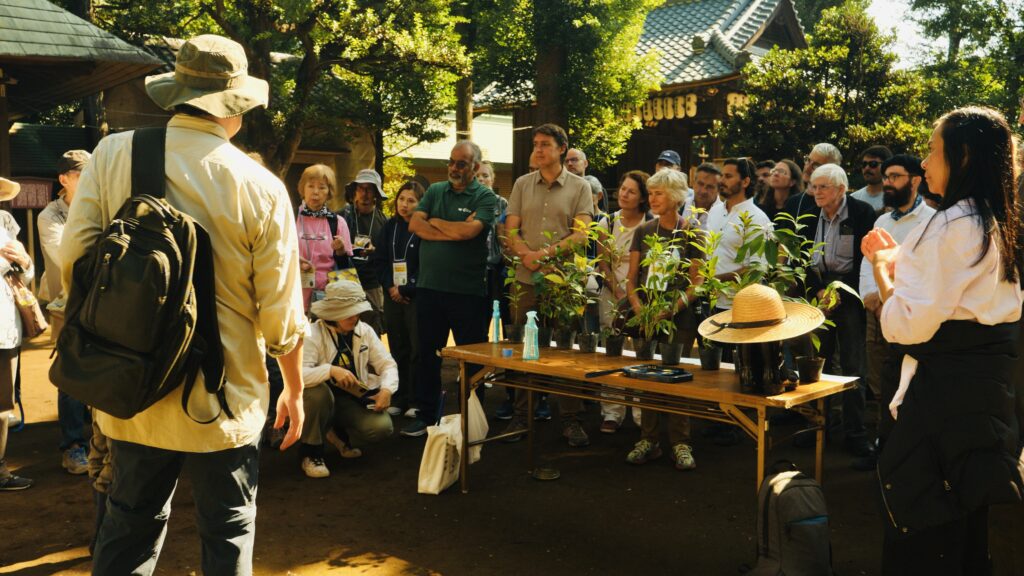
International Symposium on Towards the Creation of Miyawaki Forests as Nature Labs in Schools
Photo credit: UNCCD/G20 Global Land Initiative
With each new day, humans rediscover nature’s quiet superpower: resilience. Plants push through cracks, green returns where it wasn’t invited, and life insists on trying again. Built on this enduring strength, the Keeper of the Forests, Dr Akira Miyawaki, imagined, and brought to life, a revolutionary idea: tiny urban forests that grow fast, wild, and full of wonder.
Inspired by Japan’s sacred Chinju-no-Mori groves, these pocket forests have quietly travelled the world, taking root across parts of Asia, North America, Oceania as well as Europe. Carried by communities, ecologists, and everyday people who believe urban areas can still make space for life, the idea has adapted to many cultures and climates along the way.
What really is a Miyawaki forest?
A Miyawaki forest is less a planting technique and more an act of restoration. The Miyawaki method invites people, plants, soil, insects, and birds back into relationship with one another. Developed in the 1970s by Japanese botanist Dr Akira Miyawaki, the method grew from years spent listening closely to native landscapes and observing how forests naturally heal and succeed over time. His question was bold: instead of spacing trees far apart and waiting a lifetime for a forest to appear, what if we helped nature remember itself right away?
How it’s done, and why it works so well?
Miyawaki forests are planted close, much closer than we’re used to seeing. Three to five young saplings share each square metre, growing shoulder to shoulder. This closeness is intentional and powerful. As the plants compete for light and space, they grow upward faster, forming a dense canopy in just a few years rather than decades. Native trees, shrubs, and groundcover are chosen to reflect all layers of a mature forest: towering canopy trees, protective sub-canopy species, supportive shrubs, and living carpets of plants at the forest floor. Nothing is planted for decoration. There are no straight lines or tidy symmetry here; only the beautiful but wild logic of ecology doing what it does best.
The soil is carefully prepared with organic matter and protected with mulch, and for the first two to three years the forest is supported with watering and weeding. After that, it begins to stand on its own. Yes, without ANY human interference.
This approach is especially meaningful in cities and shared spaces, where land is limited and nature is often pushed to the margins. Even a small plot, sometimes no larger than a classroom, can transform into a thriving micro-ecosystem. These forests cool the air, soften noise, invite biodiversity, and offer people a place to breathe, wonder, and reconnect. A Miyawaki forest reminds us that nature doesn’t need perfection or vast wilderness to flourish, just care, inclusion, and a little room to grow together.
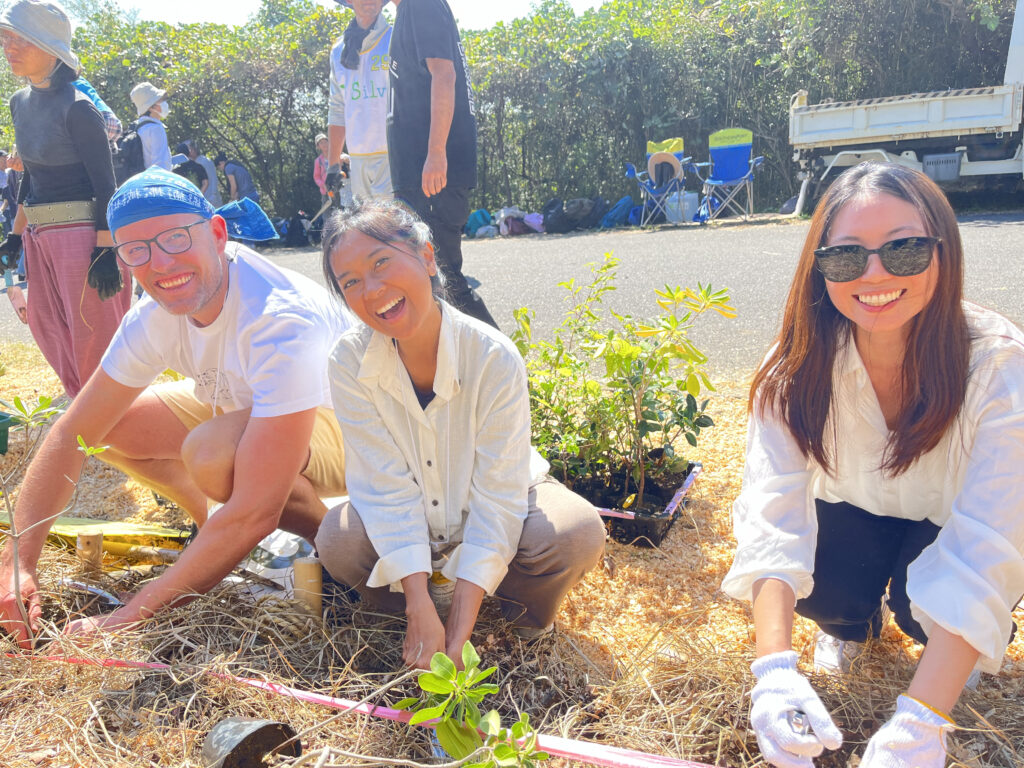
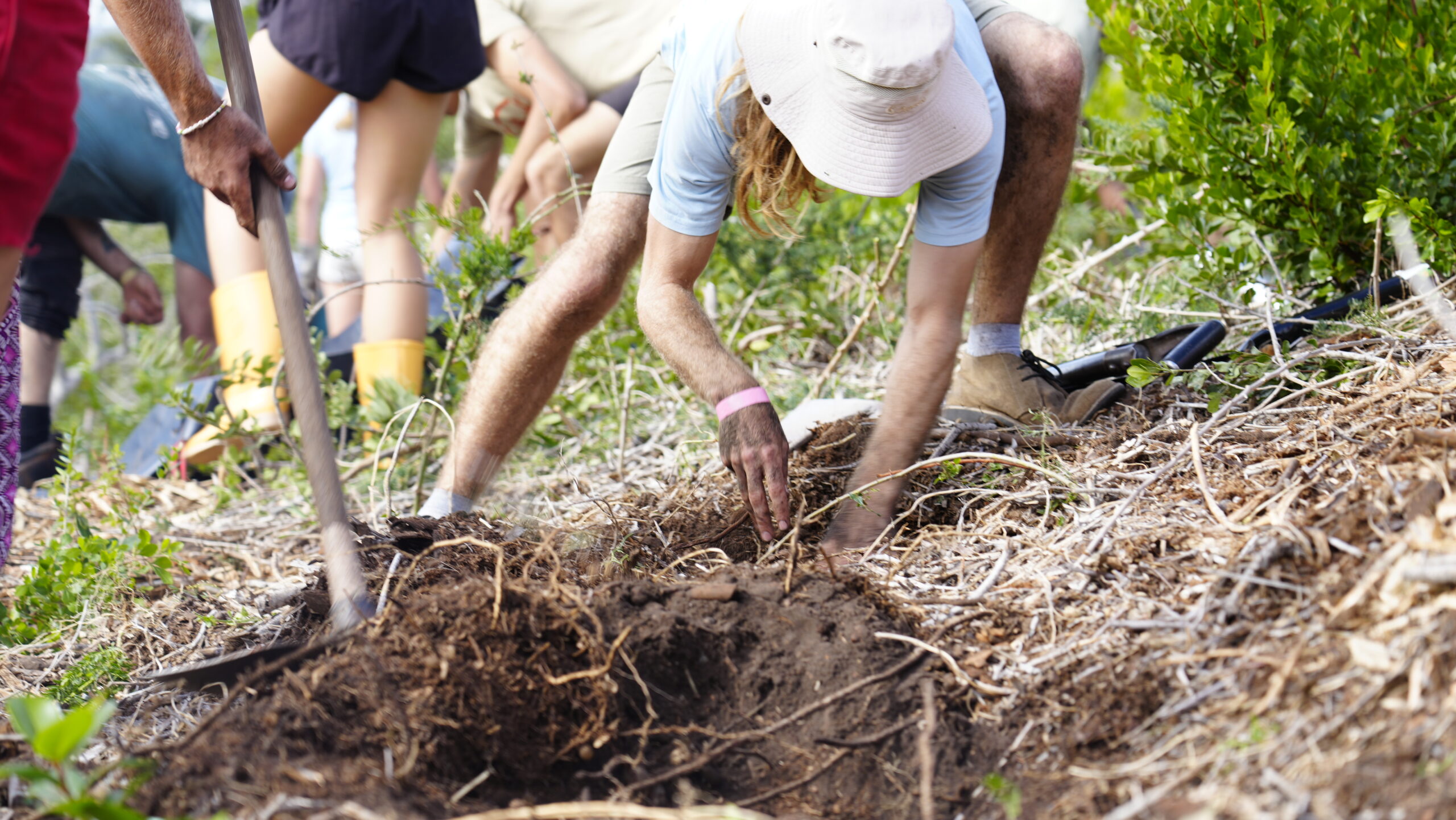
Joann Lee (r), Programme Officer at UNCCD G20 Global Land Initiative planting trees during the International Symposium on Towards the Creation of Miyawaki Forests as Nature Labs in Schools
Photo credit: UNCCD/G20 Global Land Initiative
Misconceptions and real challenges
A common misconception is that Miyawaki forests are “unnatural” because of their density. In reality, this mirrors how young natural forests regenerate after disturbance. Another concern is that they can replace grasslands or open ecosystems if planted carelessly. Ecologists stress that site selection matters meaning grasslands are not wastelands, and Miyawaki forests should only be planted where forests historically belonged.
The real challenge, though? Doing it right. Picking the wrong mix of species, neglecting watering and weeding in the crucial early years, or treating it as just another corporate social responsibility project can easily stunt a forest’s growth. Careful planning and attention: matching species to local soil, climate, and historical vegetation, make all the difference. When nurtured properly, even a tiny patch of green can flourish into a thriving ecosystem, boosting biodiversity, cooling city streets, and quietly capturing carbon along the way.
The impact
When done thoughtfully, the impact is striking. Studies of urban Miyawaki forests have shown rapid biomass accumulation and carbon sequestration. These pocket forests have quietly travelled far and wide, from Kerala and Navi Mumbai to even slipping into tiny urban corners of Paris and cities across Europe.
In India, research has shown that in just five years, a Miyawaki forest can absorb over six times more carbon per hectare than it did in its first year – proof that small forests grow into big sustainability champions. Beyond carbon, these forests cool cities, improve soil health, reduce noise, and bring back birds, insects, and shade often within a few seasons.
Across Europe, the story is similar. Tiny forests planted by organisations such as SUGi and Earthwatch Europe in cities from Toulouse to North London are attracting more than 500 species of animals and plants within a few years, restoring biodiversity in places that were once concrete or grass lawn.
Recognition and the future
The Miyawaki technique is gaining recognition around the world, not just as a green idea but as a practical, impactful solution for cities. Events are spreading the word, educating people on how to bring tiny forests to life. A five-day international symposium on Miyawaki and urban forests, titled “Towards the Creation of Miyawaki Forests as Nature Labs in Schools,” was held in Yokohama, Japan – organized by the UNCCD’s G20 Global Land Initiative, in collaboration with the MORINO Project and Yokohama National University. It highlighted urban mini-forests as tools for climate resilience, biodiversity restoration, and community engagement.Top of Form
In the same spirit, the 2025 Trees in Cities Online Summit, hosted by the UNECE Forest and Bioeconomy Section, brought together city leaders, urban forestry enthusiasts, and experts from all corners of the globe. On 16 December 2025, the virtual gathering became a living map of ideas, from turning mayoral promises into actual tree‑planting adventures, to dreaming up solutions for parched cities, and celebrating how tiny forest pockets are quietly transforming urban life. By weaving together initiatives like the Trees in Cities Challenge, the Trees in Dry Cities Coalition, and the UN Petite Forests Network, the summit showed that when minds and roots connect, cities can grow greener and cooler.
As awareness grows, more areas are exploring how to weave these small patches of green into urban planning, making them not just experiments but essential parts of tomorrow. Because if cities are our future, then perhaps these tiny forests are how the future catches its breath; through networks of miniature forests honouring native species and the roles they play together, helping cities cool down, breathe easier, and reconnect people with nature, one magical little patch at a time.
Latest News
- Young entrepreneurs from Argentina, Uganda win UN global pitch contest at ChangeNOW: Youth Ecopreneur Awards
- UNCCD Executive Secretary Dr. Fouad welcomes Saudi Arabia’s landmark achievement in land restoration

- Saudi Arabia marks restoration of one million hectares of land, advancing global momentum on land resilience

- UNCCD G20 Global Land Initiative publishes 2025 annual report

- Eight finalists named for Youth Ecopreneur Awards

Upcoming Events