Faith4Land
Mobilizing Religious Communities for Global Land Restoration
The G20 Global Land Initiative (GLI) grants programme reflects the Initiative’s commitment to empowering civil society organizations in their mission to restore degraded lands and combat desertification, while promoting sustainable land management practices. By supporting community-led restoration projects, the programme highlights the transformative power of local knowledge and innovation in addressing global environmental challenges.
*Photo credit: Pexels.com/Marek Piwnicki
The Opportunity
Faith communities reach billions of people worldwide and manage approximately 8 per cent of global habitable land. Faith4Land harnesses this unique capacity to accelerate progress toward the G20 Global Land Initiative’s goal of reducing degraded land by 50 per cent by 2040.
This dedicated programme of the G20 GLI engages, supports, and amplifies faith-led restoration efforts worldwide through capacity building, technical assistance and innovative financing mechanisms designed for religious institutional contexts.
Implementation arrangements
Civil society organizations, particularly those that are accredited with UNCCD, will be considered for the support. Organizations that are not accredited with UNCCD are strongly encouraged to start the process to become accredited.
Vast land stewardship
- Control of approximately 8 per cent of habitable land globally (World Resources Institute, 2016)
- Manage over 5 per cent of commercial forests worldwide
- Hold approximately 10 per cent of global financial investments
Unprecedented Reach and Trust
- Influence 650+ million people through established networks
- Trusted moral authority to inspire sustained action
- Regular community gatherings, creating spaces for restoration education and mobilization
Multi-Generational Commitment
- Patient, long-term engagement aligning naturally with restoration timelines spanning decades
- Established systems for intergenerational knowledge transfer
- Integration of spiritual values strengthening sustained stewardship
Values-Based Transformation
- Frame restoration as spiritual and environmental healing
- Emphasis on “inner restoration”—rebuilding humanity’s relationship with nature
- Deep community connections ensuring long-term participation
Engaging Faith Groups on Land Restoration

A 2024 stocktake by the G20 GLI surveyed over 100 key faith-led organizations, representing over 300 million believers across 24 countries. The stocktake examines the unique role and potential of faith communities in achieving the G20 Global Land Initiative’s ambitious goal of reducing degraded land by 50% by 2040.
The report reveals how religious institutions, controlling approximately 8% of habitable land globally, can transform conventional approaches to land restoration, shifting from short-term project cycles to multi-generational stewardship, and from purely technical interventions to approaches that integrate values based action with ecological science.
The stocktake highlights the distinctive strengths of faith-led restoration approaches and identifies critical opportunities to scale faith-led restoration projects. This advance issue of the stocktake was distributed to facilitate discussions at the sixteenth session of the Conference of the Parties (COP16) to the United Nations Convention to Combat Desertification (UNCCD). It makes concrete recommendations for unlocking the full potential of religious institutions in global land restoration efforts while preserving the unique spiritual and cultural approaches to environmental stewardship of the institutions.
Faith4Land addresses systematically the gaps identified from the stocktake to unlock the transformative potential of religious institutions in achieving global restoration targets.
The Faith4Land Framework
The campaign operates through three integrated pathways:
Direct Implementation Supporting faith organizations to actively manage restoration projects on religious lands and in surrounding communities, and integrating land restoration activities with existing religious practices, such as pilgrimage routes.
Knowledge Systems Integration: Bridging traditional ecological knowledge, religious teachings, and modern restoration science. Creating methodologies where indigenous wisdom, values based insights and scientific expertise mutually enhance restoration outcomes.
Policy and Advocacy Leadership: Elevating religious voices in environmental governance, from local land-use planning to international conventions. Supporting faith leaders to engage effectively on issues of land restoration within the Rio Conventions (on desertification, biodiversity conservation and climate change) and national policy processes.
Multifaith Rio Conventions Call to Action
In the lead-up to the 2024 Rio Conventions Conferences of the Parties, over 100 organizations across diverse faith traditions united to sign a landmark statement on the critical role of faith communities in addressing interconnected environmental crises.
The key message from this joint call to action?
“Advances in scientific knowledge, technical capacity and material resources need to be matched by a parallel will for implementation. History has demonstrated that this gap between knowledge and action can be bridged by faith—religious faith, faith in humanity or faith in the possibilities that emerge through collaboration.”
The Call to Action recognizes that climate change, biodiversity loss and land degradation are intrinsically linked and mutually reinforcing, which demands a coordinated response that operates at global, national, local and internal levels.
Signatories Include: Anglican Communion | Baha’i International Community | Buddhist Tzu Chi Foundation | Brahma Kumaris World Spiritual University | Catholic Youth Network for Environmental Sustainability in Africa | Islamic Foundation for Ecology and Environmental Sciences | Lutheran World Federation | Soka Gakkai International | United Religions Initiative | World Council of Churches | World Vision International | WWF Beliefs & Values Programme |
FAITHS FOR LAND MASTERCLASS
The free Masterclass helps faith communities turn their commitment to land into a practical restoration plan.
Developed by G20 GLI with WWF’s Beliefs & Values Programme, its self-paced modules are based on the Faith Tree Growing framework from WWF and Trillion Trees. No technical experience is required.
FAITHS FOR LAND COALITION
Faiths for Land is an independent coalition that grew from two years of work led by the G20 Global Land Initiative and UNCCD. It connects faith communities with restoration experts, funders and policy partners. The network includes more than 900 organizations representing 15.3 million hectares, with 500+ faith-led restoration initiatives across 85+ countries.
Get Involved
Access the Faith4Land Hub featuring detailed case studies, best practices database, land stewardship data, commitments tracker, training materials and complete knowledge resources.
Share Your Best Practices: Document your restoration work to inspire others and contribute to global knowledge.
Access Resources and Training: Explore comprehensive materials, apply for capacity-building programs and connect with technical experts.
Share Your Impact: Contribute to the global faith land stewardship database, demonstrating collective impact
Faith4Land Partners
Faith4Land is developed through collaboration with leading organizations working at the intersection of faith and environment:
WWF Beliefs & Values Programme | UNEP Faith for Earth Coalition | United Religions Initiative | World Vision International | Interfaith Rainforest Initiative | World Resources Institute Faith and Sustainability Initiative | Faiths for Biodiversity | Pro Social World | Diversearth | UN Decade on Ecosystem Restoration
News and Updates
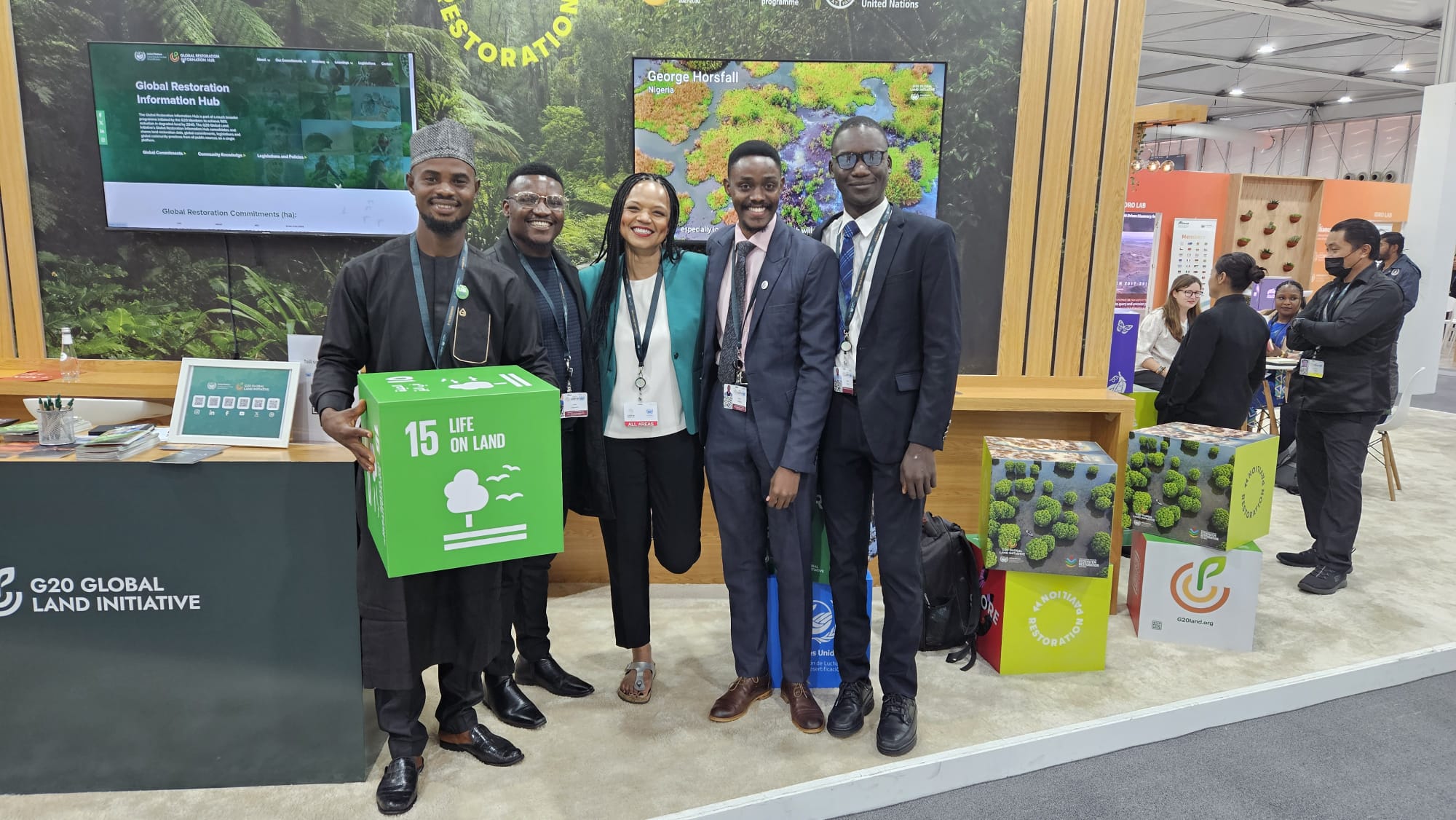
Restoration Pavilion launches at UNCCD COP16
The Restoration Pavilion at UNCCD COP16, organized by G20 Global Land Initiative (GLI), formally opened today, uniting global leaders, scientists, faith communities and grassroots innovators under a shared vision of restoring degraded lands and addressing the climate crisis.

Engaging Faith Groups on Land Restoration
This stocktake examines the unique role and potential of faith communities in achieving the G20 Global Land Initiative’s ambitious goal of reducing degraded land by 50% by 2040.
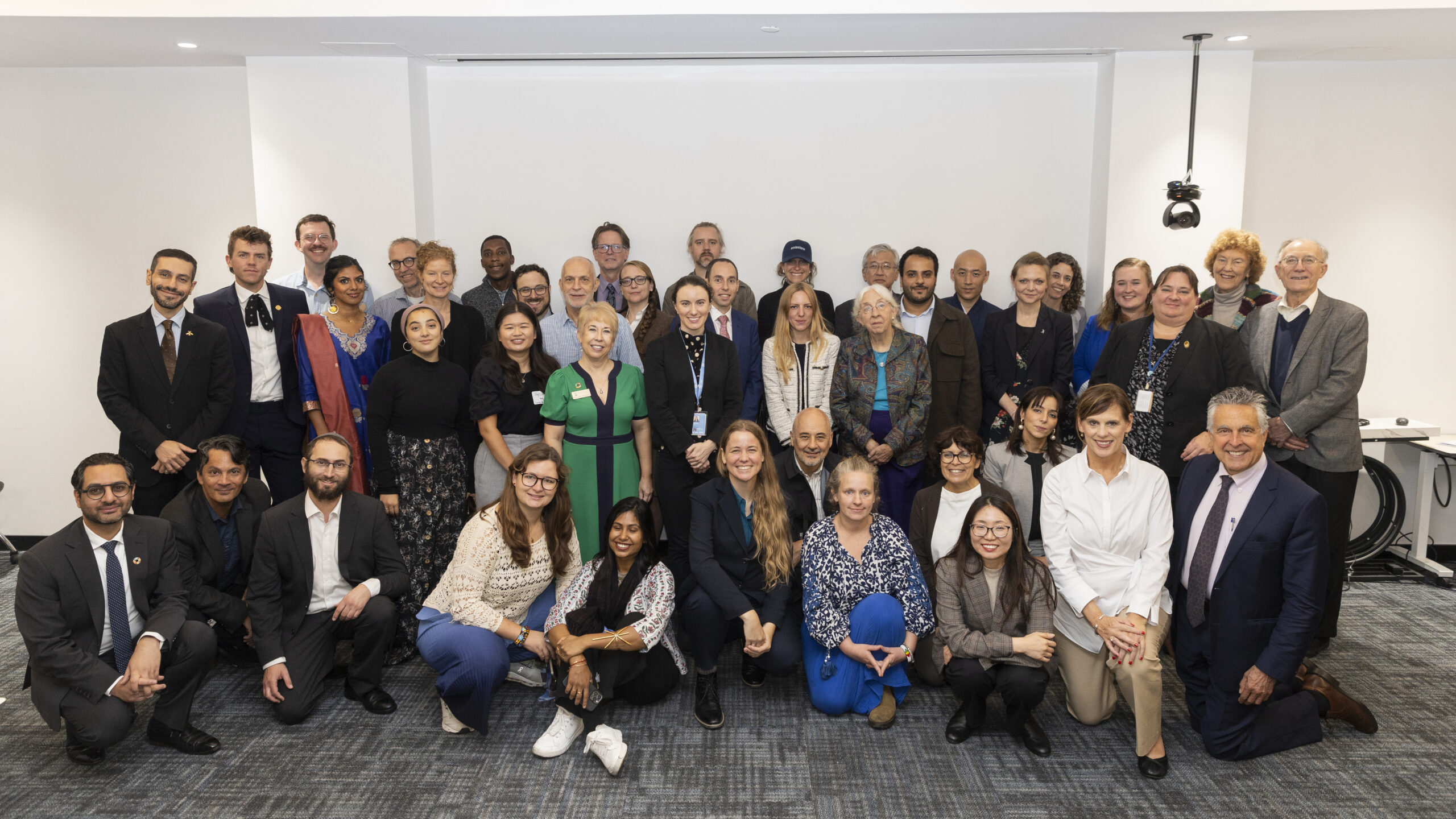
Faith Leaders Advance Global Restoration Agenda
A powerful interfaith movement is gaining momentum to address the interconnected challenges of land degradation, climate change and biodiversity loss.
Faith4Land is an initiative of the G20 Global Land Initiative Coordination Office, housed at the United Nations Convention to Combat Desertification (UNCCD). It was launched at UNCCD COP16 in Riyadh.
