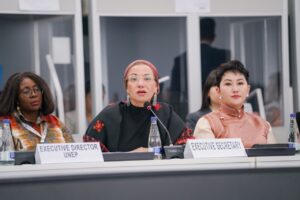
Faith4Land Week: Faith Leaders Unite for Land Restoration
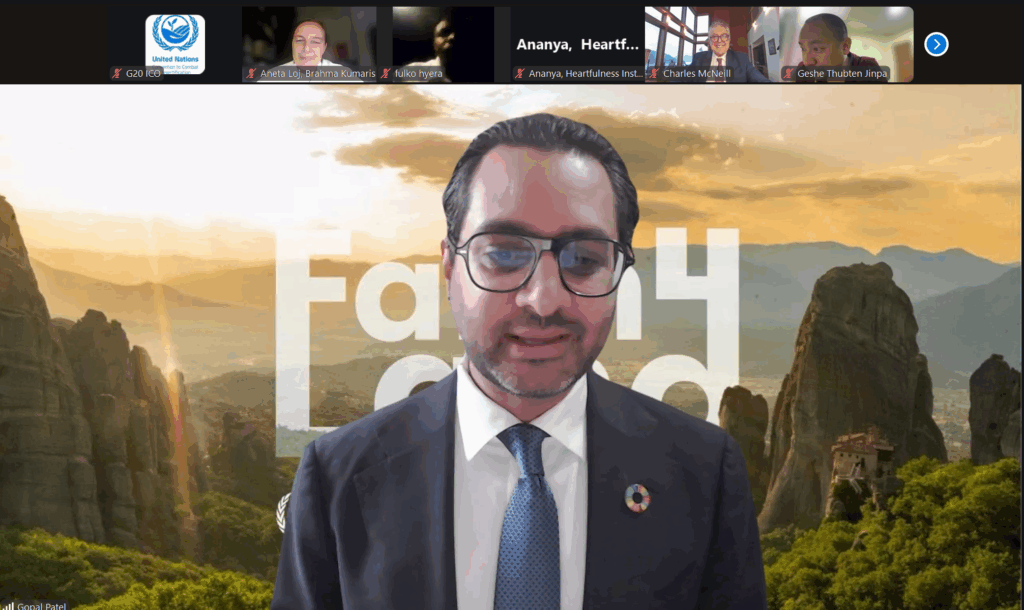
Photo credit: UNCCD/G20 Global Land Initiative
Faith4Land Week brought together faith leaders, restoration practitioners and environmental advocates from around the world for two landmark virtual sessions, launching a new chapter in faith-led land restoration on the road to UNCCD COP17 in Mongolia.
Faith4Land Faith Leaders Gathering
The week opened with the Faith4Land Faith Leaders Gathering held on 25 November, hosted by the UN Convention to Combat Desertification-G20 Global Land Initiative. This session launched “Engaging Faith Groups on Land Restoration,” a comprehensive stocktake report revealing both the enormous potential and persistent challenges facing faith communities in environmental stewardship.
The findings tell a compelling story. Faith communities steward 8 per cent of the world’s habitable land and operate 50 per cent of global educational institutions. Yet the stocktake, drawing from its engagement with over 100 faith-led organizations throughout 2024, uncovers a striking paradox: while nearly all faith organizations (92 per cent) express strong commitment to restoration work, they consistently face barriers in accessing funding and technical expertise.
The 90-minute gathering brought together representatives from Al-Mizan, Nepal Buddhist Federation, Brahma Kumaris and others to examine successful initiatives and explore how faith traditions across the world are driving real impact in land restoration and resilience.
“Faith communities have maintained sacred relationships with land for millennia,” reflected Charles McNeill of the Interfaith Rainforest Initiative. “This stocktake demonstrates how traditional stewardship wisdom can inform modern restoration science at precisely the moment when both are most needed.”
Kamran Shezad from Bahu Trust and drafting team member of Al-Mizan shared practical insights: “Our experience shows that when faith communities partner with the right organisations and receive funding that supports their values-based approaches, they can deliver outstanding restoration results while strengthening community resilience.”
Dr. Ananya S. Rao of the Heartfulness Institute connected inner and outer transformation: “Restoration of the earth begins with restoration of the human heart – through simplicity, purity, and mindful living that allows us to give more than we take. When we align our inner state with nature, our everyday choices become acts of giving that help heal the planet.”
Faith4Land Virtual Masterclass
The stocktake findings reveal a critical implementation gap: 74 per cent of (or 3 out of every four) faith organizations are already actively engaged in restoration work, yet most face significant gaps in technical capacity and systematic approaches. Only 28 per cent (about one b every four) have formal restoration policies and 84 per cent specifically requested technical training support.
Responding directly to this need, the Faith4Land Virtual Masterclass took place on 26 November, co-led by World Wildlife Funds’ Beliefs & Values Programme and Trillion Trees, to provide hands-on guidance for planning and implementing faith-led restoration initiatives.
This practical capacity-building session moved beyond inspiration to implementation, equipping participants with frameworks drawn from the “Tree Growing for Conservation and Ecosystem Restoration” guide developed specifically for faith-based actors.
Participants explored proven approaches to planning, partnership-building and long-term stewardship that honor both ecological science and spiritual values through case studies from Indonesia, Kenya, Nepal and Tanzania, and the Atlantic Forest that spans several countries in Latin America.
Chantal Elkin of WWF emphasized the strategic timing of scaling restoration efforts led by faith-based organizations: “With UNCCD COP17 approaching and the G20 Global Land Initiative targeting 50 per cent reduction in degraded land by 2040, faith communities represent an essential, and historically under-represented, force for environmental transformation.”
New Resources for Faith-Led Restoration
Faith4Land Week also marked the launch of a dedicated Faith4Land section on the Global Restoration Information Hub. This comprehensive resource platform brings together:
- Case studies from faith communities worldwide
- Best practices in restoration
- Land stewardship data
- A commitments tracker to follow faith-led restoration pledges
- Training materials
- Curated knowledge resources
These resources are designed to support faith actors at every stage of their restoration journey, ensuring the momentum from Faith4Land Week continues to grow.
Looking Ahead to COP17
As we approach UNCCD COP17 in Mongolia, faith communities are positioned not just as critical partners in restoration but as leaders whose wisdom and long-term stewardship traditions offer essential guidance for healing our relationship with the land.